Finding the right greenery for your home can be tricky, especially when you realize there are many common houseplants that are toxic to dogs.
A few years ago, one of my dogs started vomiting for no apparent reason. He wasn’t eating anything new, and he hadn’t gotten into the trash. There was no clear explanation at all.
What surprised me the most?
The problem wasn’t his diet—it was a houseplant sitting quietly in the corner of the room. That moment completely changed the way I look at houseplants in a home with dogs.
This article is for people who love both houseplants and dogs and don’t want to choose between them. I’ll share the most common houseplants that are toxic to dogs, why they’re dangerous, and what I personally did to make my home safer.
Why Some Houseplants Are Toxic to Dogs
Dogs are not big eaters. They may bite the leaves out of curiosity, boredom, or even the stress of being at home by themselves throughout the workweek. The issue begins with substances found in plants, such as oxalates, which are sharp crystals that irritate the mouth and intestines and can quickly cause pain and bloating. Or saponins, which cause vomiting and worse by producing a soapy foam in the stomach. In my experience, these low-maintenance plants are popular in suburban homes with lots of windows, but individuals like us who are busy tend to overlook garden center labels.
Why is it important?
A small ingestion can cause an upset stomach, but severe cases—like with sago palms—can severely damage the liver, sometimes fatal if not caught early. I’ve seen friends in Texas deal with this situation when their puppy attacked a potted plant while the window was open. It’s not about being scared; It’s about making intelligent choices in our fast-paced lives where we can’t see them 24/7.
Thought you might like this
16 Toxic House plants to Humans That Can Cause Serious Harm
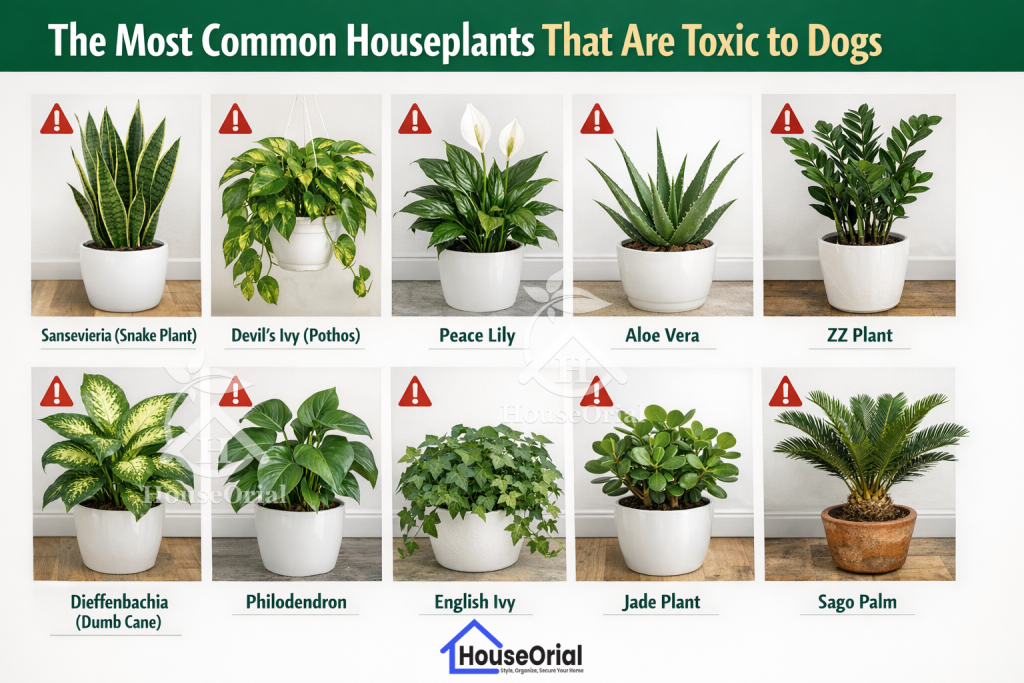
The Most Common Houseplants That Are Toxic to Dogs
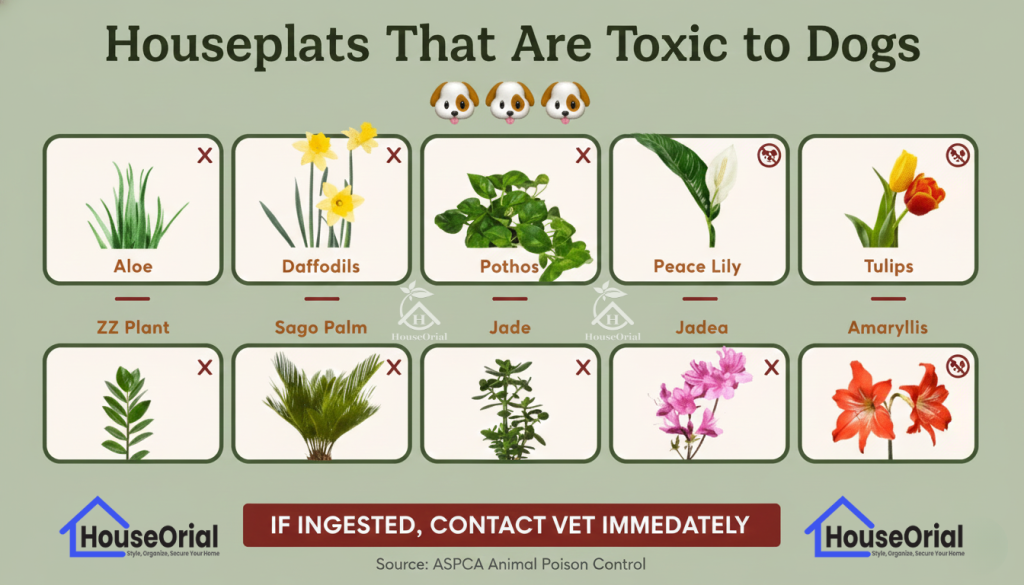
- Sansevieria, or snake plant
One of the most prevalent houseplants that are poisonous to dogs, particularly in American houses and apartments, is the snake plant. When chewed, its saponins may cause irritation to a dog’s digestive tract. Dogs that are bored frequently bite the stiff leaves, which can cause weakness, vomiting, and diarrhea. - Devil’s Ivy, or Pothos
Pothos is one of the most neglected houseplants that are poisonous to dogs, despite being well-known for its trailing vines. The plant contains crystals of calcium oxalate, which burn the throat and tongue. After chewing it, dogs may gag, slobber profusely, or exhibit swelling around the mouth. - Peace Lily
Despite being one of the houseplants that are poisonous to dogs, peace lilies are frequently utilized for interior décor. They can upset the stomach, produce excessive drooling, and irritate the mouth when consumed. Dogs can readily get these plants because they are frequently placed on the ground. - Aloe Vera
Despite being prized for its therapeutic qualities, aloe vera is one of the houseplants that can be poisonous to dogs if consumed. Lethargy, diarrhea, and vomiting can be brought on by the sap found in the leaves. Aloe is frequently kept on windowsills or low shelves by dog owners, increasing the risk of accidental ingestion. - Zamioculcas zamiifolia, or ZZ Plant
Despite being one of the lesser-known houseplants that are poisonous to dogs, the ZZ plant is popular in contemporary American homes. It contains calcium oxalates, which cause stomach and mouth irritation. Dogs that chew it may show drooling, discomfort, or digestive issues. - Dieffenbachia (Dumb Cane)
Dieffenbachia is one of the more hazardous houseplants that are toxic to dogs, despite being a traditional indoor plant. The tongue and throat may expand significantly when chewing the leaves. Breathing may become difficult in severe cases, necessitating quick veterinarian care. - Philodendron
Although they are fashionable and simple to cultivate, philodendrons are poisonous to dogs. Drooling, vomiting, and mouth discomfort are all brought on by the poisons. Because the huge leaves are easily accessible and hang low, dogs frequently gnaw on them. - The English Ivy
Although English ivy is one of the houseplants that might be poisonous to dogs if consumed, it is frequently used for shelves and hanging baskets. The leaves may induce diarrhea, vomiting, and stomach pain. Sensitive dogs may experience discomfort from even minute levels. - The Jade Plant
Although jade plants are frequently seen in American homes, many owners are unaware that they are poisonous to dogs. Jade use can result in sadness, nausea, and impaired coordination. Because the thick leaves resemble chewable toys, dogs might gnaw them. - The Sago Palm
One of the most hazardous houseplants that is poisonous to dogs is the sago palm. The plant is toxic in every part, but the seeds are particularly so. This plant is quite dangerous for pet families because even a small amount can cause liver failure.
How to Identify Plant Poisoning Symptoms in Dogs
If our beloved four-legged friend curiously puts his mouth on a poisonous plant in the garden or at home, it can be fatal. The symptoms of plant poisoning depend on the type of plant and how much the dog has eaten. Common symptoms include excessive drooling, vomiting, loose stools, and swelling of the mouth or tongue. If the dog eats too much of something poisonous, he may have difficulty breathing, restlessness, changes in heart rate, and even seizures. Sometimes poisoning causes the dog to become lethargic or lose interest in food. If any of these symptoms appear, you should immediately consult a veterinarian, as timely treatment can save your pet’s life.
What to Do If Your Dog Eats a Toxic Plant: 5 Immediate Steps
If you suspect or see that your dog has ingested a toxic plant, follow these steps:
1. Remove the Dog from the Source: First, move the dog away from the plant so that he cannot eat any more. If there is any residue in his mouth, carefully remove it.
2. Identify the Plant: If possible, confirm the name of the plant or take a picture. Even try to figure out how much the dog ate. This will help the doctor start treatment quickly.
3. Check for Symptoms: Observe how your dog behaves. Is he vomiting, shaking, or drooling? Take note of this information.
4. Call Your Vet Immediately: Never try to induce vomiting yourself (unless advised by your doctor). Call your local veterinarian or an animal poison control center immediately .
5. Bring a Sample: When you go to the clinic, if possible, bring a small branch or leaf of the plant with you. This will help the doctor identify the exact toxin.
Dog-Friendly Indoor Plants: 5 Safe Choices for Your Home
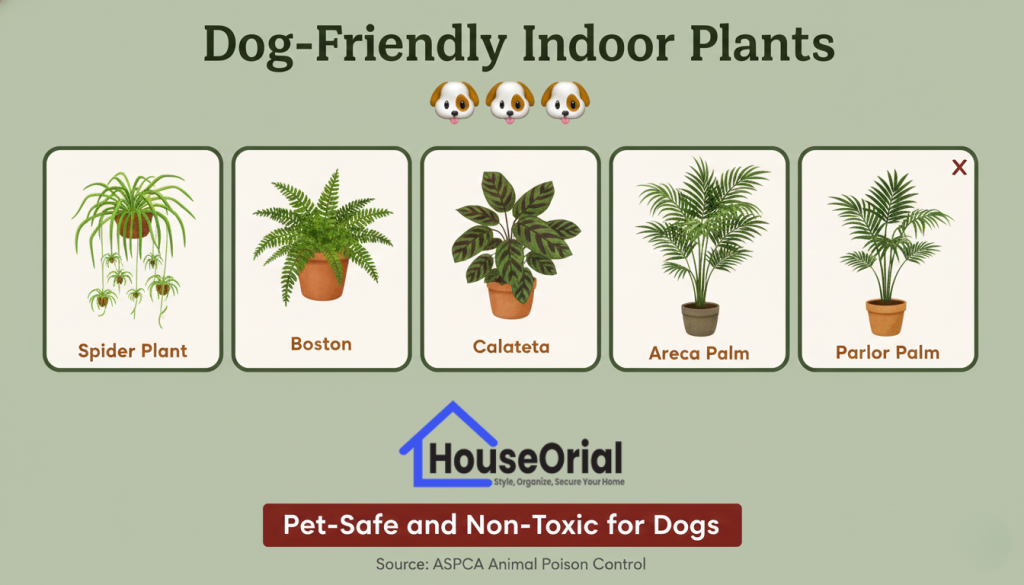
Just as green plants are good for our health, they can be dangerous for your pet if the selection is wrong. But don’t panic! There are some great indoor plants that will add an aesthetic touch to your home without harming your beloved dog’s health. Let’s take a look at 5 such safe friends:
1. Spider Plant: Not only does this plant remove harmful toxins from the air, but its slender, hanging leaves are completely safe for dogs. If your dog even nibbles on a leaf or two while playing, there is no need to worry.
2. Boston Fern: Dogs have a different attraction to ferns. While many ferns are harmful, the Boston Fern is completely safe for your pet. It brings a piece of the forest to the corner of the house.
3. Calathea: If you like to see a little colorful or artistic leaves in your interior, then Calathea is the best. Since it is non-toxic, your beloved companion will be able to roam around it safely.
4. Areca Palm: If you need a large tree to give your home a little luxury or tropical look, choose the Areca Palm. It is non-toxic and large in size, so it works great to keep it out of the reach of dogs or to enhance the beauty of the room.
5. Parlor Palm: This is ideal for those who do not have much time to care for it or whose house has low light. It is possible to keep it indoors without putting your dog’s health at risk.
5 Common Houseplant Mistakes Dog Owners Make
It is a common misconception that a plant’s aesthetic appeal and natural appearance guarantee its safety for dogs. However, numerous typical indoor gardening practices can unintentionally endanger your pet. Here are the most frequent errors made by dog owners regarding houseplants and their solutions.
1. Selecting Toxic Plants Without Adequate Research
It is quite simple to select plants based solely on their visual appeal; however, several widely favored houseplants—such as philodendron, pothos, lilies, and sago palms—are harmful to dogs. Even a minor nibble can lead to vomiting, diarrhea, or more severe reactions. Always consult the ASPCA’s list of toxic plants prior to introducing any into your residence.
2. Placing Plants Within Dogs’ Reach
Dogs possess a natural curiosity and may chew on leaves, disturb soil, or topple pots. Positioning plants on low shelves or the ground makes them easily reachable, heightening the risk of ingestion. Consider utilizing hanging planters, elevated shelves, or barriers to keep your dog away.
3. Utilizing Dangerous Fertilizers and Pesticides
Numerous fertilizers, pesticides, and plant treatments contain substances that are harmful to dogs. Applying these products carelessly or leaving them accessible can result in significant health issues. Opt for a fertilizer that is pet-safe and always adhere to the provided instructions meticulously.
4. Overlooking Symptoms of Plant Poisoning
Symptoms such as vomiting, excessive salivation, lethargy, or diarrhea may suggest plant ingestion, yet some dog owners may dismiss mild signs. Prompt action can avert serious complications. If you suspect your dog has consumed a toxic plant, reach out to a veterinarian without delay.
5. Misjudging Dogs’ Self-Control
Even well-trained dogs may chew on plants if they feel bored or inquisitive. Assuming your dog will consistently “know better” can result in unfortunate incidents. Always monitor the interactions between your dog and houseplants.
How I Made My Home Dog-Safe Without Losing My Love for Plants
Upon discovering the number of common houseplants that are harmful to dogs, I realized that I did not want to panic or completely eliminate indoor plants from my home. Instead, I sought a more intelligent and practical solution—one that is effective in a bustling household.
➱ To begin with, I removed the most hazardous plants from areas accessible to my dog. Plants located at floor level and on low shelves posed the greatest risk, particularly in the living room where my dog spends the majority of his time. If a plant was within reach, it was either relocated or given to someone else.
➱ Furthermore, I altered my criteria for selecting plants before bringing them into my home. Rather than choosing based solely on aesthetics, I now verify whether a plant is safe for pets. If a plant is listed as toxic to dogs, I simply bypass it—regardless of its popularity.
➱ Additionally, I began to utilize vertical space more purposefully. Hanging planters, wall-mounted shelves, and plant stands allowed me to keep greenery out of reach while still enlivening the space. This strategy proved particularly effective in smaller apartments where floor space is at a premium.
➱ Most importantly, I ceased to assume that my dog would “ignore plants.” Dogs tend to explore when they are bored, curious, or anxious. Designing my home with this understanding significantly improved the situation.
This method did not demand perfection—only awareness, improved placement, and safer selections. Since implementing these changes, I have enjoyed peace of mind, knowing that my home accommodates both my passion for plants and the safety of my dog.
FAQ: Houseplants That Are Toxic to Dogs
1. What if my dog only licks a toxic plant— is that dangerous?
A: Licking can still cause irritation from sap or residues. Monitor closely; even minor contact led to drooling in my experience.
2. How much of a toxic plant is dangerous?
A: It depends on the plant and the dog’s size. Some cause reactions with just a few bites.
3. Can dogs learn to avoid toxic plants?
A: Some do—but you should never rely on training alone for safety.
4. Is it better to avoid plants altogether?
A: Not necessary. With smart choices and placement, you can have both plants and pets.
5. What’s the safest option for dog owners?
A: Research every plant before bringing it home and choose dog-safe varieties whenever possible.
Final Thoughts on Houseplants That Are Toxic to Dogs
Living with dogs teaches you something important. Your home should support their safety, not challenge it.
Once I understood which houseplants are toxic to dogs, I stopped guessing—and started choosing with intention. That peace of mind is worth far more than any trendy plant. If this article saved you even one stressful vet visit, it did its job.