
The Christmas tree is more than just a decorative item; it has thousands of years of history, cultural significance. Every December, millions of homes, shops and city squares are lit up with a dazzling evergreen that instantly says “Christmas!” But have you ever wondered where this tradition came from? Why are evergreens used? What is the actual Christmas trees real name ? Or how many types of Christmas trees exist around the world?
From ancient pagan rituals to glittering modern trends, from the science behind perfect needle retention to the 2025 viral decoration styles; this is your complete, no-fluff guide to everything Christmas tree. Whether you’re picking your very first tree or you just want to impress everyone with fun facts at this year’s holiday party, you’ll find it all here: history, species, safety, eco-tips, decoration trends, and expert advice on choosing the one that belongs in your home.
Learn more:
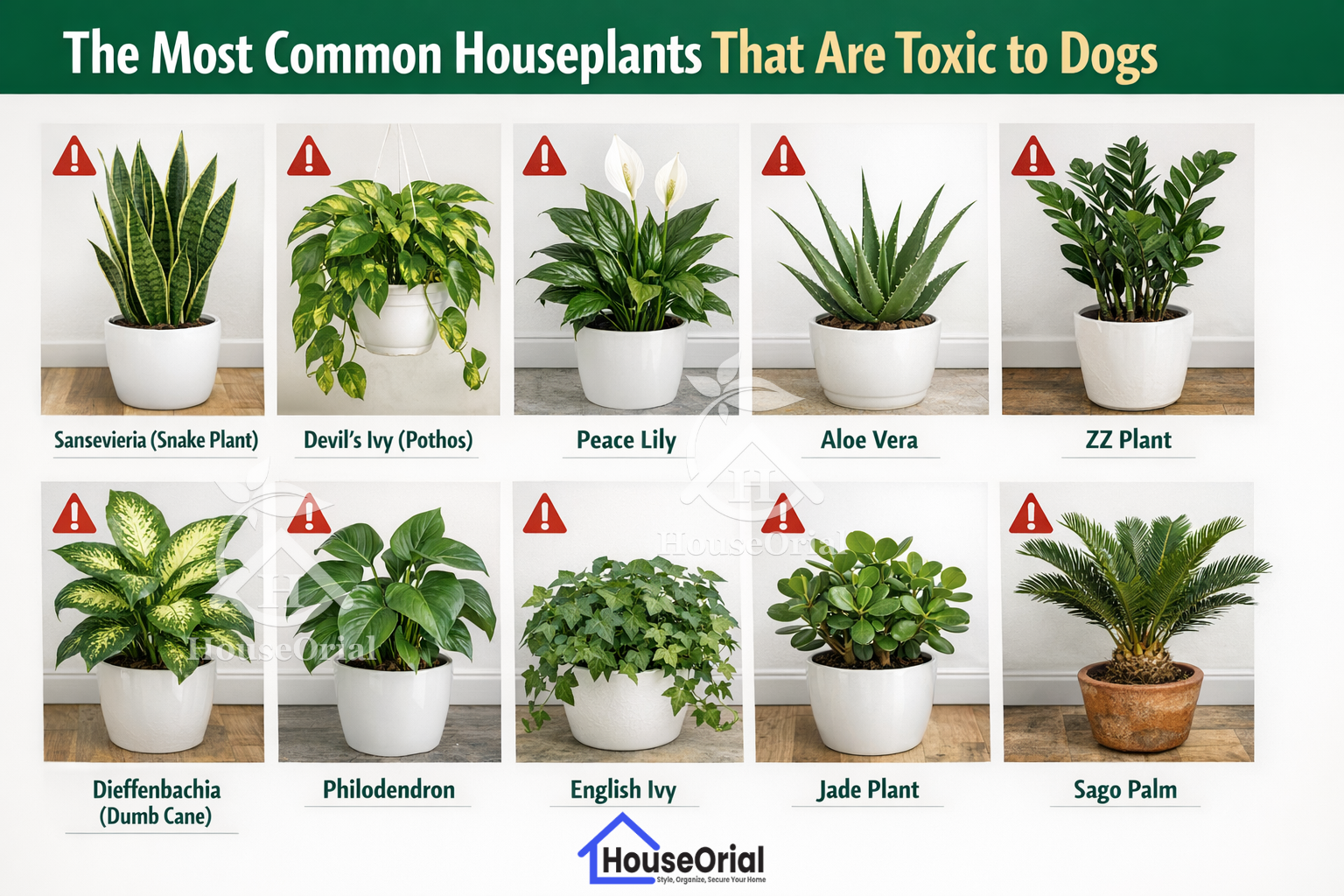
- 10 Houseplants That are Toxic to Dogs
- Making Christmas Tree look Fuller: 10 Proven Tips
- How to organize small kitchen counter: 11 Easy & Effective Tips
- 12 Solutions on How to Organize a Small Kitchen Without Cabinets
- 15 Home Tips for Winter That Saved My Heating Bill: Seal Leaks, Sleep Better 2025
1. What is a Christmas tree?
A Christmas tree is an evergreen coniferous tree (usually a fir, spruce, or pine) decorated with lights, ornaments, tinsel, garlands, and topped with a star or angel. It is a symbol of life, light, and hope during the darkest time of year and serves as the centerpiece of Christmas celebrations in homes worldwide.
2. Christmas trees real name Tree Species (Expert Botanical Explanation)
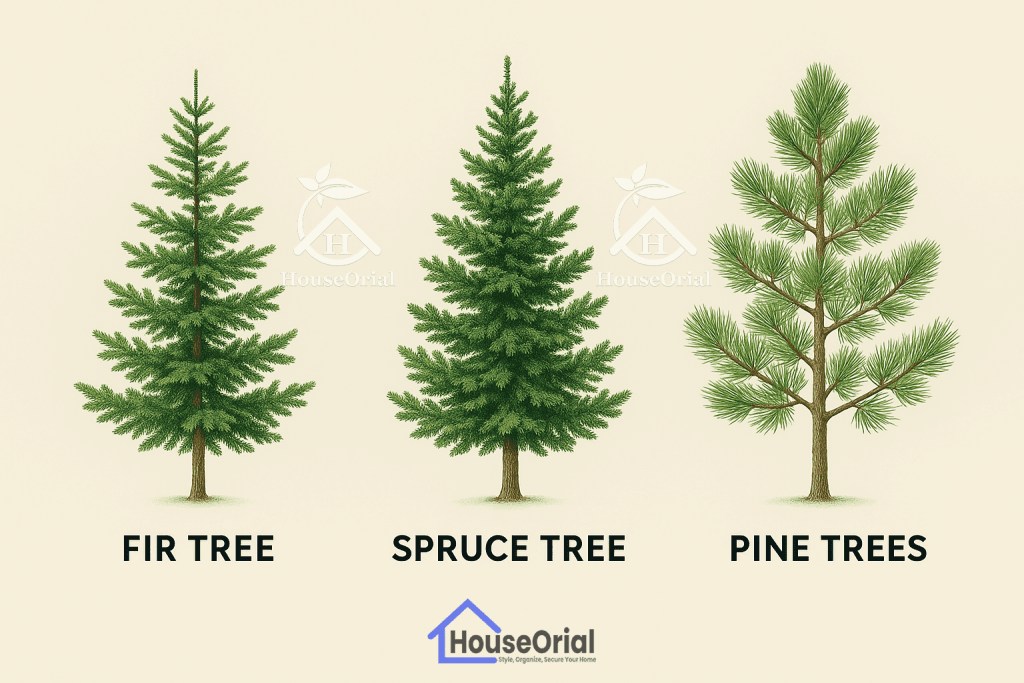
Many people believe “Christmas tree” refers to one type of tree. But experts categorize them into Fir, Spruce, and Pine, each with its own scientific name.
FIR TREES (Most Popular Worldwide)
These retain needles longer and have strong fragrance.
- Fraser Fir (Abies fraseri)
The most preferred Christmas tree in the U.S. because of its perfect shape and soft needles. - Balsam Fir (Abies balsamea)
Known for its iconic “Christmas smell.” - Noble Fir (Abies procera)
Thick, sturdy branches; holds heavy ornaments well. - Nordmann Fir (Abies nordmanniana)
Popular in Europe because needles don’t fall off easily.
SPRUCE TREES
- Norway Spruce (Picea abies)
Traditional European Christmas tree since the 1800s. - Blue Spruce (Picea pungens)
Loved for its silver-blue color.
PINE TREES
- Scots Pine / Scotch Pine (Pinus sylvestris)
Excellent needle retention; minimal mess. - White Pine (Pinus strobus)
Long, elegant, soft needles for a luxurious look.
These are the true botanical species behind the trees we commonly refer to as “Christmas trees.”
3. The History of the Christmas Tree
The Christmas tree boasts a vibrant and fascinating history. Let’s take a clear, step-by-step look at how this beloved tradition evolved over the centuries.
3.1: Before Christianity: Ancient Evergreen Beliefs
Thousands of years before Christmas existed, ancient civilizations used evergreen branches:
- Egyptians decorated their homes with green palm leaves to symbolize eternal life.
- Romans celebrated Saturnalia using evergreens for good fortune.
- Vikings believed evergreens protected homes from darkness and evil.
3.2: The History
- 16th-century Germany: Most historians agree the modern Christmas tree began in Protestant Germany. Devout Christians brought decorated trees into their homes. Some say it started with Martin Luther—he was supposedly walking home one winter night, awestruck by stars twinkling through evergreen branches, and recreated the scene at home with candles on a tree.
- Paradise trees: As early as the Middle Ages, churches used “paradise trees” on December 24 (Adam and Eve’s feast day) decorated with apples to represent the Garden of Eden.
- 1840s: The tradition exploded globally when Britain’s Queen Victoria and her German husband Prince Albert were sketched standing with their children around a decorated Christmas tree in 1848. It instantly became fashionable in Britain and America.
- United States: German immigrants brought the custom in the 1700s, but it only went mainstream in the 19th century. Today the most famous U.S. tree is the Rockefeller Center Christmas Tree in New York City (lit since 1933).
4. Why Evergreen Trees? (Expert Symbolic Analysis)
Evergreen trees those that stay green throughout the year—have been central to Christmas traditions for centuries. Their selection is not random; experts point out that these trees carry deep symbolic, psychological, and cultural significance. Here’s a detailed look at why evergreens are used as Christmas trees:
1. Survival Through Winter
Evergreens maintain their vibrant green color even during the harshest winter months. This remarkable ability symbolizes:
- Strength and resilience: Standing tall despite cold and snow, evergreens remind us of enduring life even in difficult times.
- Eternal life and continuity: Unlike deciduous trees, they do not shed all their leaves in winter, representing life that persists through cycles of hardship.
- Hope and renewal: Their unwavering greenery becomes a beacon of hope during the darkest months, signaling that spring and growth are on the horizon.
2. Psychological Comfort
The presence of green in winter has significant emotional and psychological effects:
- Warmth and calm: Evergreen trees bring a sense of life and vitality to otherwise bare and cold indoor spaces.
- Positive energy: Their lush foliage creates a peaceful and inviting atmosphere, which is why decorating a Christmas tree often becomes a comforting family ritual.
- Connection to nature: Even in urban apartments, an evergreen tree fosters a subtle link to nature, reducing stress and enhancing mood.
3. Religious and Cultural Meaning
Evergreen trees carry profound spiritual and cultural symbolism, particularly in Christian traditions:
- Rebirth and everlasting life: In Christianity, the evergreen tree represents the eternal life offered through faith, echoing the themes of resurrection and renewal.
- Symbol of divine protection: Historically, evergreens were thought to ward off evil spirits during winter festivals, a belief that merged into Christian customs over time.
- Unity and celebration: Placing and decorating the tree has become a ritual that unites families and communities, reinforcing shared values and traditions.
The use of evergreen trees in Christmas celebrations is not just about aesthetics. Their resilience, psychological benefits, and deep-rooted symbolism make them an emotionally powerful centerpiece of the holiday season. This combination of natural beauty and meaningful symbolism is why the Christmas tree continues to inspire joy, hope, and togetherness in homes around the world.
5. Types of Christmas Trees
Christmas trees come in many different species, each with unique characteristics, aesthetics, and fragrance. Understanding the differences can help you choose the perfect tree for your home, whether you want a traditional look, a fragrant tree, or one that can hold heavy ornaments.
(A). 1. Fir Tree (Abies species): The Superstar. Dark green, soft needles, and a wonderful fragrance. Its ability to hold leaves is exceptional, making it America’s number 1 choice. The very dense branches are ideal for carrying ornaments.
2. Fraser Fir: Deep green needles, soft texture, dense branches, and a strong fragrance. Perfect for those who want a classic, durable tree.
3. Balsam Fir: Known for its signature Christmas scent, soft needles, and symmetrical cone shape. A traditional favorite.
4. Douglas Fir: A budget-friendly option. It grows quickly, so it’s often less expensive. Its shape is well-balanced and has a pleasant citrusy scent. The leaves are also soft.
5. Noble Fir: Best for heavy ornaments: Its branches are very stiff, which can hold even the heaviest ornaments well. Its color is a light bluish-green, which gives it a luxurious look.
6. Grand Fir: Soft needles, slightly loose branches and a strong, pleasant aroma that fills the room.
7. Concolor Fir / White Fir: Colorful variety: Its soft leaves have a light bluish color and give off a distinct citrusy scent. It is known for its aesthetic appearance.
(B). 1. Pine trees (Pinus species): Pine trees are widely appreciated for their durability and long-lasting needles. They often have a classic, full shape and are easy to maintain.
2. Scots / Scotch Pine: European Heritage: This tree is known for its ability to retain its leaves for a long time. It does not tend to shed its leaves and its branches are quite strong.
3. White Pine: Elegant, long, soft needles, providing a luxurious and charming look for any home.
(C). 1.Spruce trees (Picea species): Spruce trees are appreciated for their perfect cone shape and bright green or blue colored needles. While visually stunning, some varieties shed their needles quickly, so they require more frequent watering.
2. Norway Spruce: Classic heritage tree with a traditional shape, made famous by the “Charlie Brown” tree. Best suited for outdoor spaces or short-term indoor use.
3. Blue Spruce: Attractive blue-silver needles, stiff branches and moderate fragrance. Ideal for a unique, eye-catching centerpiece.
6. Artificial Christmas Trees: Modern Options and Features
Artificial Christmas trees have come a long way, offering convenience, durability, and a wide range of styles for every home. Here’s a detailed overview:
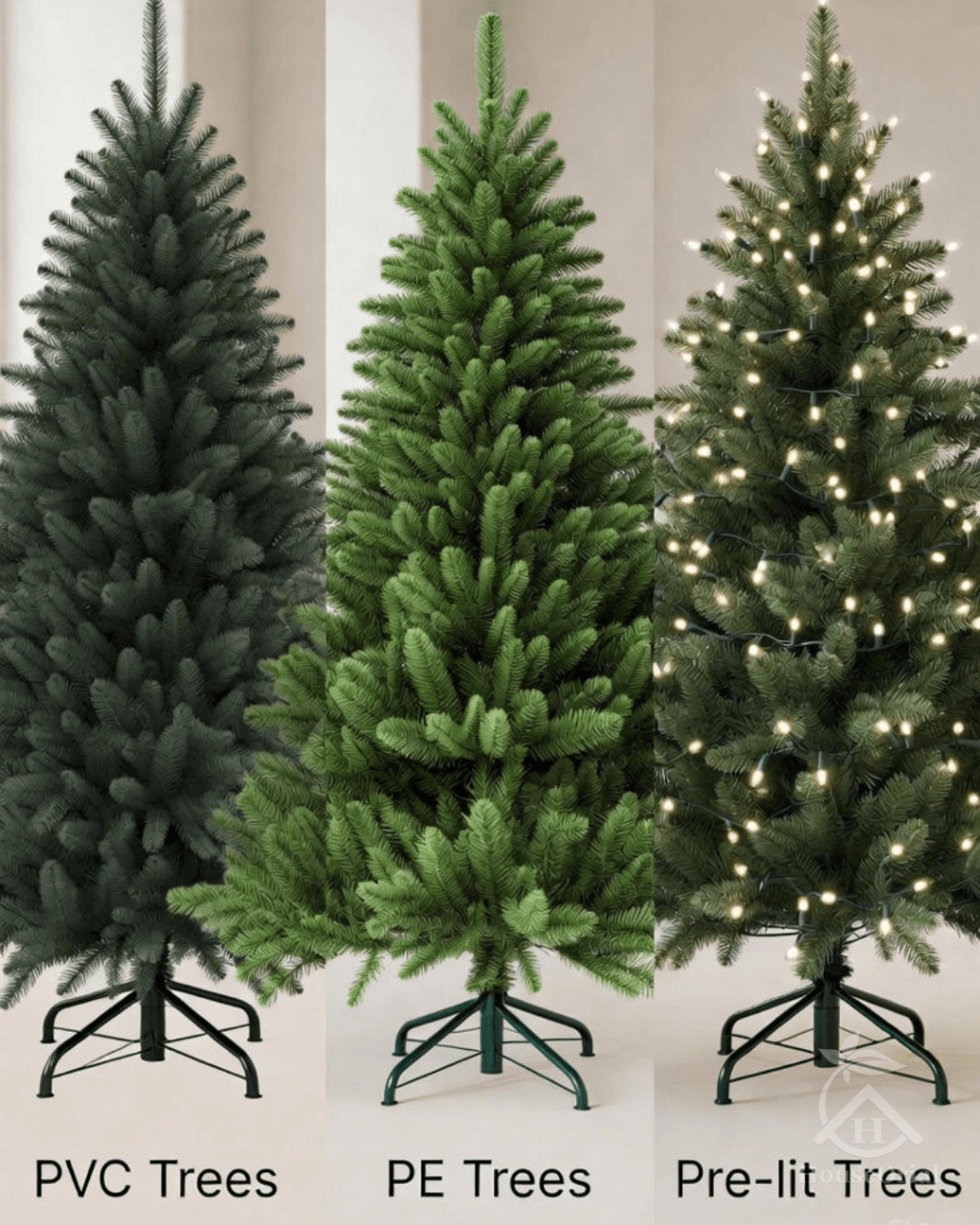
PVC Trees (Traditional): The most affordable option, PVC trees offer a classic look and are easy to maintain. They are lightweight and widely available.
PE Trees (Polyethylene / True Needle): High-end models feature molded “true needle” branches that closely mimic real evergreen trees. These provide a realistic appearance and a more luxurious feel.
Pre-lit vs. Unlit: Many artificial trees come pre-strung with LED lights, available in warm white, multicolor, or even color-changing options. Pre-lit trees save setup time, while unlit versions allow for customizable decoration.
Flocked Trees: These trees are coated in artificial snow, creating a charming winter-wonderland effect perfect for cozy, snowy-themed décor.
Modern & Specialty Styles: Artificial trees now come in every imaginable shape, color, and size. Options include slim/pencil trees for small spaces, tabletop trees, upside-down trees, and colored trees in white, pink, black, or even glittered designs. There is truly a tree for every taste and home aesthetic.
7. What the World Calls the Christmas Tree (30+ Magical Names!)
Ever wondered what people in other countries shout when they drag their sparkly tree home? Spoiler: it’s never just “Christmas tree.” Here are the sweetest, coziest, and most magical names for our favorite holiday evergreen from around the globe:
1. German: Weihnachtsbaum (“Christmas tree”) & Tannenbaum (“fir tree”)
2. French: Sapin de Noël
3. Spanish: Árbol de Navidad
4. Italian: Albero di Natale
5. Portuguese: Árvore de Natal
6. Polish: Choinka
7. Russian: Йолка / Yolka
8. Swedish: Julgran (“Yule spruce”)
9. Norwegian: Juletre
10. Danish: Juletræ
11. Finnish: Joulukuusi (“Yule spruce”)
12. Dutch: Kerstboom
13. Hungarian: Karácsonyfa
14. Czech: Vánoční stromeček
15. Romanian: Brad de Crăciun
16. Greek: Χριστουγεννιάτικο δέντρο (Christougenniátiko déntro)
17. Turkish: Yılbaşı ağacı (“New Year tree”)
18. Japanese: クリスマスツリー (Kurimasu Tsurī)
19. Korean: 크리스마스 트리 (Keuliseumaseu Teuri)
20. Hindi: क्रिसमस ट्री (Krisamas Tree)
21. Arabic: شجرة الميلاد (Shajarat al-Milad – “Tree of the Nativity”)
22. Hebrew: עץ חג המולד (Etz Chag HaMolad)
23. Icelandic: Jólatré
24. Welsh: Coeden Nadolig
25. Irish Gaelic: Crann Nollag
26. Hawaiian: Kumulāʻau Kalikimaka
27. Filipino/Tagalog: Puno ng Pasko
28. Vietnamese: Cây thông Noel
29. Esperanto: Kristnaska arbo
30. Latin: Arbor Nativitatis
8. Quick Fun Facts About Christmas Trees
- The world’s tallest cut Christmas tree was a massive 221-foot (67.36 m) Douglas Fir displayed in Seattle in 1950—truly a record-breaking spectacle!
- A real Christmas tree takes 7–10 years to reach the perfect height and fullness for holiday decoration. Growing a tree is a long-term labor of love.
- Each year, over 25–30 million real Christmas trees are sold in the United States alone, highlighting the enduring popularity of this festive tradition.
- Artificial trees, on the other hand, are reusable for 7–20+ years, making them an increasingly popular choice worldwide for convenience, sustainability, and long-term value.
These fun facts show not only the scale and tradition of Christmas trees but also how modern innovations like artificial trees are shaping holiday celebrations around the world.
9. Choosing the Right Christmas Tree (Expert Tips)
Selecting the perfect Christmas tree can make or break your holiday décor. Whether you prefer a real tree or an artificial one, here’s a comprehensive guide to help you make the best choice.
9.1: If You Want a Real Tree
When choosing a live Christmas tree, experts recommend checking three key factors:
- Needle Freshness: Gently bend a needle. If it snaps cleanly, the tree is fresh. Avoid trees with brittle or dry needles, as they will shed quickly indoors.
- Fragrance: A strong pine or fir scent indicates high moisture retention. The more fragrant the tree, the longer it will stay fresh and vibrant.
- Branch Strength: Check the branches by gently pressing them. Sturdy branches are essential for holding ornaments, lights, and other decorations without sagging.
Additional tips: Look for trees that are symmetrical and evenly shaped. Avoid trees with bare spots or broken branches for a fuller, balanced look.
9.2: If You Want an Artificial Tree
Artificial trees offer convenience, durability, and versatility. Here’s what to look for:
- High PE Content: Polyethylene (PE) trees have molded “true needle” branches, providing the most realistic appearance.
- Dense Branches: Full, dense branches give your tree a lush and natural look.
- Strong Metal Stand: A sturdy stand ensures stability, especially for larger trees.
- Clear Assembly Instructions: Make sure the tree comes with easy-to-follow instructions to avoid frustration during setup.
- Pre-lit or Non-lit Options: Pre-lit trees save time and effort, while unlit versions allow full customization of your lights.
- Warranty: Many artificial trees come with multi-year warranties. Consider this as it guarantees durability and peace of mind.
10. Christmas Tree Size Guide
Choosing the right tree height is crucial for both aesthetics and safety. Experts recommend the following:
- 4–6 feet: Ideal for small apartments or cozy spaces.
- 6–7.5 feet: Perfect for most homes, balancing presence without overwhelming the room.
- 8–12 feet: Suitable for large rooms, halls, or open living areas.
- 18+ feet: Designed for hotels, shopping malls, or grand public displays.
Expert Tip: Always leave 6–12 inches of space between the top of the tree and your ceiling. This ensures the tree doesn’t feel cramped and allows room for a star, angel, or other topper.
11. Modern Christmas trees Decoration Styles Name (2024–2025)
11.1 Cozy Cabin Style
- Rustic, warm, hygge-inspired
- Wooden ornaments, pinecones, burlap ribbons
- Warm golden fairy lights
11.2 Modern Glam
- Luxurious metallic tones: rose-gold, gold, champagne
- Velvet ribbons, statement ornaments
11.3 Scandinavian Minimalism
- Neutral palette, thin lights
- Natural textures: dried flowers, pinecones
11.4 Candyland Whimsical
- Pastels: pink, blue, mint
- Candy-inspired décor, gingerbread figures
11.5 Classic Red & Gold
- Bold red and gold, traditional ornaments
- Warm lighting, nostalgic feel
11.6 All-White Winter Wonderland
- Frosted branches, silver ornaments
- Soft fairy lights, dreamy snowy vibe
12. 5 Viral Christmas Tree Decoration Trends 2025
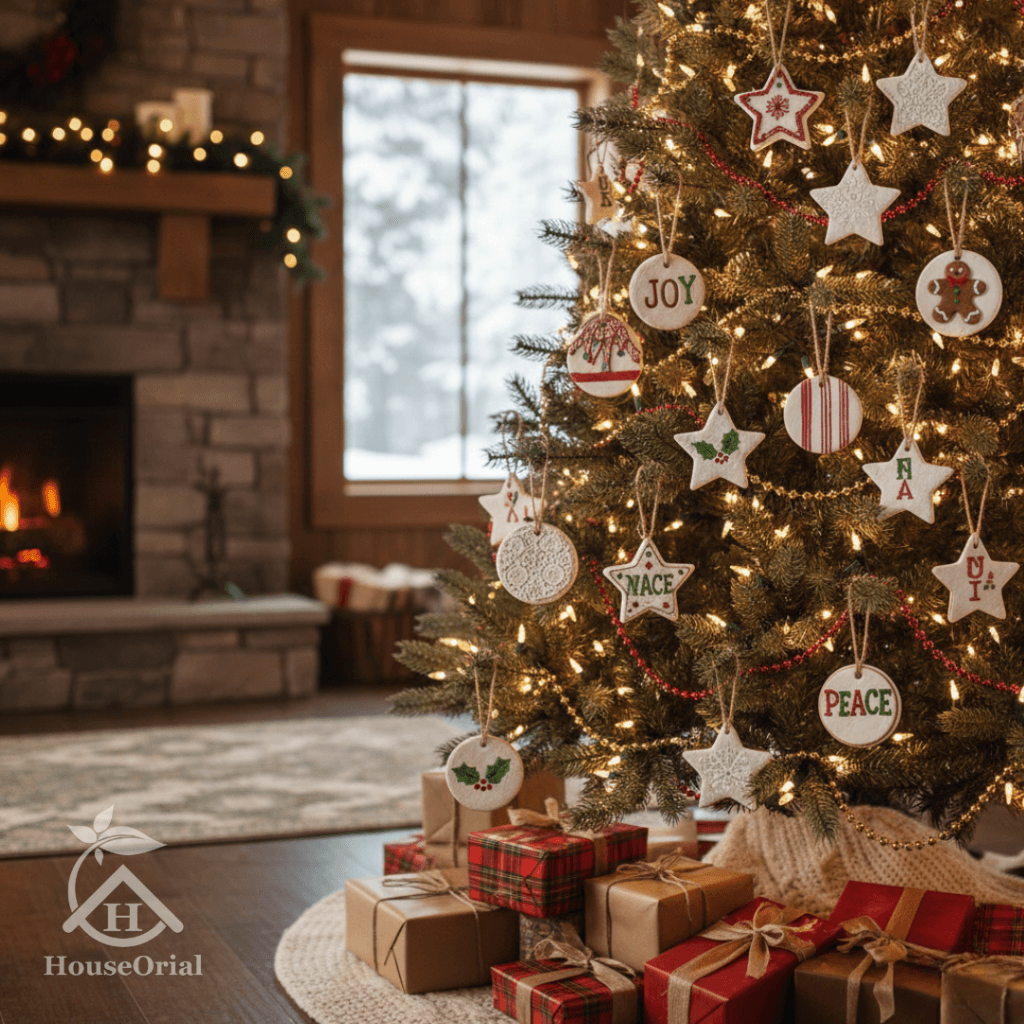
▶ Salt Dough Ornaments: This DIY trend is a favorite among crafters. Mix flour, salt, and water to form a smooth dough. Roll it out about 1/4 inch thick and use cookie cutters to create shapes like stars, hearts, or snowflakes. Make a small hole at the top, then bake at 120°C (250°F) for 2–3 hours. Once cooled, paint in metallic, pastel, or bright colors and thread a ribbon through the hole to hang on the tree. Personalize with names or dates to make a lasting keepsake.
▶ Orange Burn Decorations: Perfect for a natural aroma and rustic look. Slice fresh oranges thinly and bake at 100°C (210°F) for 2–3 hours until fully dried. Let cool and thread a string or ribbon to hang them on the tree. You can also add cinnamon sticks or cloves for extra fragrance. These decorations bring a warm, cozy, and festive vibe.
▶ Nature-Inspired Decorations: Bring the outdoors inside with pinecones, acorns, dried flowers, and eucalyptus. For a festive touch, lightly spray them with gold, silver, or white paint. Attach twine loops to hang them easily on your tree. This trend is eco-friendly and adds timeless elegance to any Christmas tree style.
▶ Minimalist Geometric Ornaments: Perfect for modern homes, these ornaments use simple shapes like triangles, stars, and cubes. Create them from cardstock, wire, or clay and paint in neutral or metallic shades. Attach a string for hanging. These geometric ornaments give your tree a sleek, contemporary, and Instagram-worthy look.
▶ Personalized Memory Ornaments: These ornaments celebrate family memories and milestones. Add names, initials, dates, or small photos using resin, polymer clay, or mini frames. Decorate with paint, glitter, or markers. Once ready, attach a ribbon and hang on your tree. This trend is sentimental and makes each Christmas truly unique.
13. Eco-Friendly & Reusable Christmas Tree Decorations
Sustainability is a key trend in 2025, and many people are choosing decorations that can be used year after year. Popular options include wooden ornaments, fabric ribbons, bamboo decorations, and reusable garlands. Natural elements like pinecones, acorns, and dried flowers are also widely used to give the tree a rustic and timeless charm. These eco-friendly decorations not only reduce waste but also add a warm, natural, and elegant feel to any Christmas tree.
13.1: How to Make Eco-Friendly Christmas Tree Decorations
1. Wooden Ornaments: Wooden ornaments are a classic eco-friendly option. You can cut thin wood sheets into fun shapes like stars, hearts, or little trees. Sand the edges smooth, optionally paint or varnish them, and add a string loop to hang. These ornaments are sturdy and reusable year after year.
2. Fabric Ribbons & Bows: Fabric ribbons and bows are an easy way to add warmth and texture. Cut strips of cotton, linen, or burlap, then fold, tie, or twist them into bows or garlands. Attach them to your tree branches for a soft, cozy, and sustainable decoration.
3. Bamboo Decorations: Bamboo is lightweight, natural, and durable. Cut small bamboo sections, drill a hole in each piece, and thread a string to create hanging ornaments or mini garlands. These simple decorations bring an organic feel to your tree.
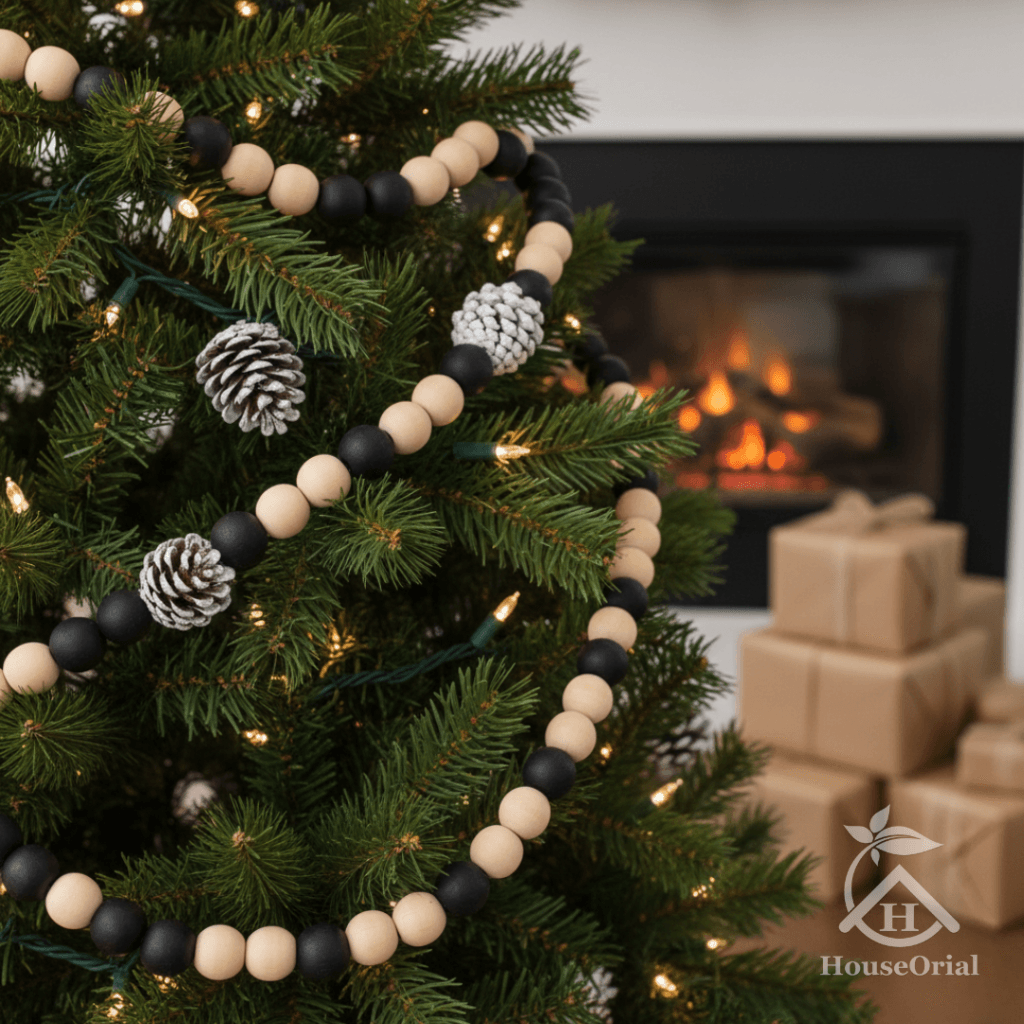
4. Reusable Garlands: Reusable garlands are perfect for reducing waste. Use twine, fabric scraps, wooden beads, or other natural materials. Tie or thread them together to form a long-lasting garland that can be reused for many Christmas seasons.
5. Natural Elements: Pinecones, acorns, and dried flowers are timeless decorations. You can leave them natural or lightly spray them with gold, silver, or white paint. Attach twine loops and hang them on the tree to add rustic charm and a nature-inspired look.
14. Symbolic Meaning Behind Tree Decorations
- Star topper: Hope and the Star of Bethlehem
- Angel topper: Protection and peace
- Lights: The arrival of light in darkness
- Garlands: Connection and unity
- Ornaments: Memories, milestones, blessings
Every piece carries a story.
15. How to Care for Your Christmas Tree (Step-by-Step)
1. For Real Trees:
- Trim the Trunk: Cut about 1 inch from the base before placing it in the stand.
- Water Regularly: Keep the stand filled with fresh water every day to prevent needles from drying.
- Placement: Keep the tree away from heat sources like heaters, fireplaces, radiators, or direct sunlight.
- Needle Check: If needles start dropping excessively, adjust water or move the tree slightly away from heat.
2. For Artificial Trees:
- Assembly: Follow the manufacturer’s instructions carefully for a stable setup.
- Light Check: Inspect all pre-lit wires for damage and ensure connections are secure.
- Storage: After the season, disassemble carefully and store in a dry, cool place to maintain branch shape and lights.
3. Lighting Tips:
- Use LED lights for lower heat and energy efficiency.
- Always turn off lights when leaving home or sleeping.
- Avoid overloading electrical outlets to prevent short circuits.
4. Decoration & Safety:
- Hang fragile ornaments higher up if children or pets are around.
- Avoid placing candles or flammable decorations near the tree.
Pro Tips: Proper care—water, placement, and safe lighting—keeps your real or artificial Christmas tree fresh, vibrant, and festive throughout the holiday season.
16. Christmas Tree Safety Tips (Expert Advice)
Here are the most important, expert-backed Christmas tree safety tips to keep your holidays merry and fire-free (sourced from the National Fire Protection Association (NFPA), U.S. Fire Administration, Consumer Product Safety Commission, and fire service guidelines):
Choosing the Tree
- If buying a real tree: Choose one with fresh, green needles that don’t fall off when touched. Bendable needles and a sticky trunk base are good signs.
- Cut 1–2 inches off the base before placing in the stand (exposes fresh wood for better water absorption).
- Artificial trees: Only buy ones labeled “fire-resistant.” Even then, they can still burn intensely if ignited.
Tree Placement & Care (Real Trees)
- Keep it at least 3 feet away from any heat source: fireplaces, radiators, space heaters, heat vents, candles, or even large lamps.
- Water daily — A freshly cut tree can drink up to a gallon of water per day at first. Never let the water level drop below the base of the tree. Dry trees are extremely flammable (a dry tree can become fully engulfed in flames in under 30 seconds).
- Place the tree in a stable, wide-based stand that holds at least one gallon of water.
- Avoid blocking exits with the tree.
Lighting Safety (Most Christmas tree fires are caused by electrical issues)
- Inspect light strings every year — Discard any with frayed wires, cracked sockets, loose bulbs, or excessive kinking.
- Never use indoor-rated lights outdoors.
- Use no more than three standard-size sets of lights per single extension cord.
- Always turn off tree lights before leaving home or going to bed (or use a timer).
- Never use lit candles on or near the tree — even on a mantel nearby.
Additional Critical Tips
- Keep matches, lighters, and candles away from the tree area.
- Do not burn tree branches or wrapping paper in the fireplace — they can cause intense, sudden flare-ups.
- Have working smoke alarms on every level and test them monthly.
- Keep a fire extinguisher readily accessible (and know how to use it).
- Dispose of the tree promptly after Christmas or when it starts dropping needles excessively. Many communities have tree recycling programs; dried-out trees should never be kept in the garage or leaned against the house.
What NFPA Says About Christmas Tree Fires in America?
- U.S. fire departments respond to an average of 160 home fires per year that start with Christmas trees.
- These fires cause an annual average of 2 deaths, 12 injuries, and $12 million in direct property damage (NFPA 2017–2021 data).
- Electrical distribution or lighting equipment is involved in almost half of Christmas tree fires.
Follow these rules and you’ll dramatically reduce the already small risk. Enjoy the season safely!
Which Christmas tree suits my home?
Consider room size and ceiling height when choosing a tree.
1. Small rooms or ceilings under 8 feet: Opt for a 5–6.5 ft slim or pencil-style tree.
2. Recommended varieties for small spaces: Slim Fraser Fir or Noble Fir (real or artificial) — take up less floor space and are easy to decorate.
3. Large rooms or ceilings over 9 feet: Choose a 7.5–9 ft flower-shaped Fraser Fir or Balsam Fir for a grand look and natural fragrance.
4. Children or pets at home: Use a tree with a heavy, stable stand to prevent tipping.
5. Allergy sufferers: Pick a hypoallergenic Douglas Fir or a high-quality artificial pre-lit tree.
General tip: Leave at least 1 foot of space from the ceiling and select a tree that makes you think, “This is perfect for my house!
Christmas Tree FAQs
1. Which Christmas tree is better — real or artificial?
(A): Real trees smell amazing and are biodegradable, while artificial trees are reusable and low-maintenance. The best choice depends on your lifestyle, budget, and decorating preferences.
2. Which tree will stay fresh the longest?
(A): Fraser Fir, Balsam Fir, and Noble Fir stay fresh the longest, typically 4–5 weeks, and also offer a pleasant, natural fragrance.
3. How can I make my Christmas tree smell more intense?
(A): Add fresh pine branches, use essential oil ornaments, or place a natural aroma diffuser near the base to enhance the scent.
4. How many lights do I need for my Christmas tree?
(A): Most decorators recommend 100 lights per foot of tree. For a fuller, more vibrant look, you can double this amount.
5. What is the best way to prevent a real Christmas tree from shedding needles?
(A): Keep the water reservoir full, avoid placing the tree in hot rooms, and trim 1 inch off the trunk before putting it in the stand.
6. How do I keep my cat or dog from climbing the tree?
(A): Use lemon peels or pet-safe repellents, secure the tree to the wall, and avoid hanging fragile ornaments on lower branches.
7. How long does an artificial tree last?
(A): A good-quality artificial tree can last 10–20 years if it is properly stored in a box after each holiday season.
Conclusion
A beautiful Christmas tree not only lights up your home but also fills December with joy and festive spirit. Whether you choose a fresh tree or an artificial one, picking the right size and species ensures it is both stunning and easy to care for. From eco-friendly ornaments to Instagram-worthy designs, every tree can reflect your personal style while keeping your home safe and cozy. This holiday season, may the most beautiful tree in your home shine brightly, bringing happiness to all. Merry Christmas!