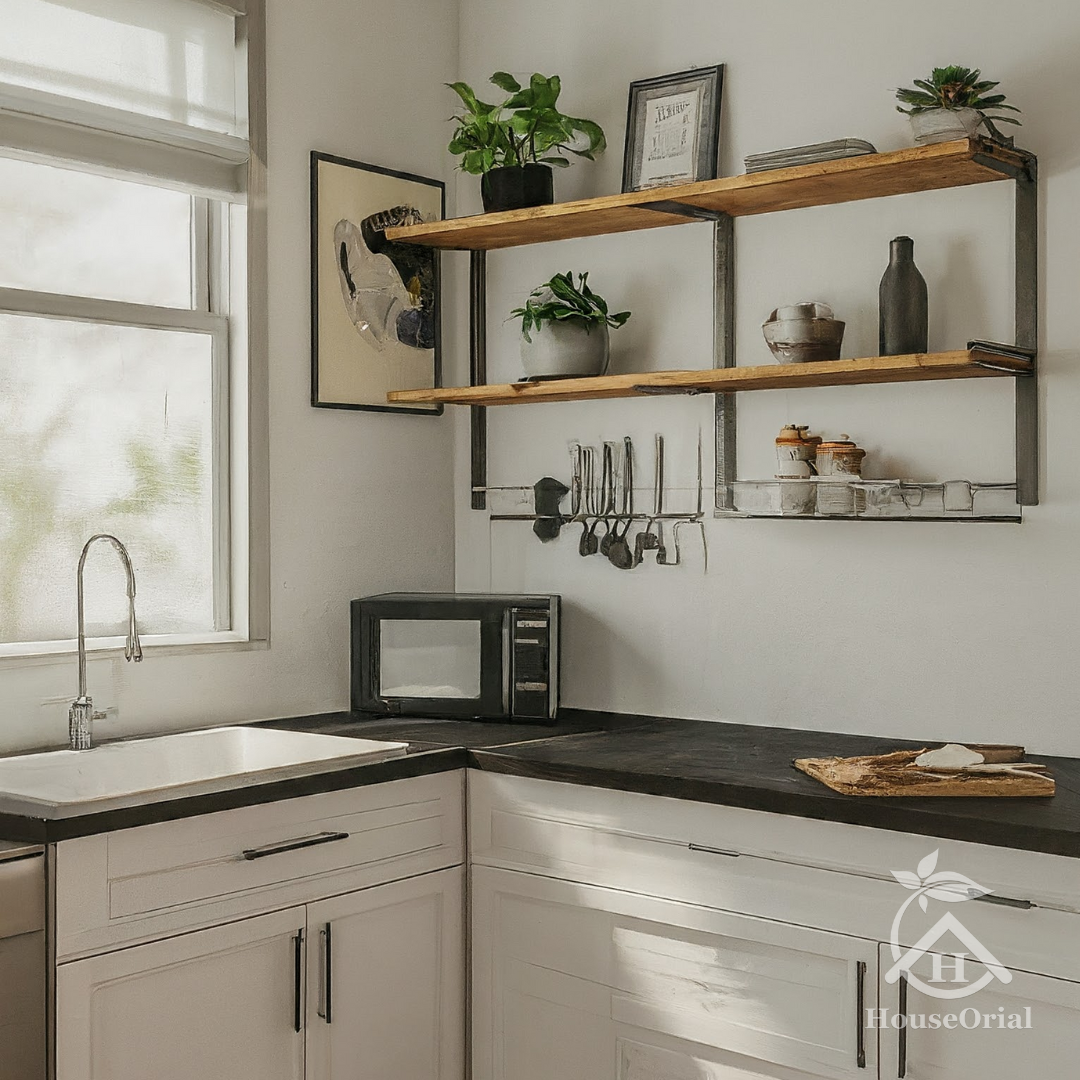
You have a small kitchen but no cabinets. Worried about where to store your kitchen appliances? But just because you don’t have cabinets doesn’t mean you can’t take inspiration from some of the best small kitchen organization ideas without cabinets. There’s no doubt that decorating a small kitchen without cabinets requires a little extra planning. But don’t worry about how to organize a small kitchen without cabinets; this comprehensive guide will give you some of the best ways.
How to organize a small kitchen without cabinets
1.assess your Space
Before diving into organization techniques, take a step back and assess your kitchen space. Note available wall space, corners, unused areas, and existing storage solutions such as shelves or racks. Understanding your kitchen layout will guide you in determining the best organization strategies.
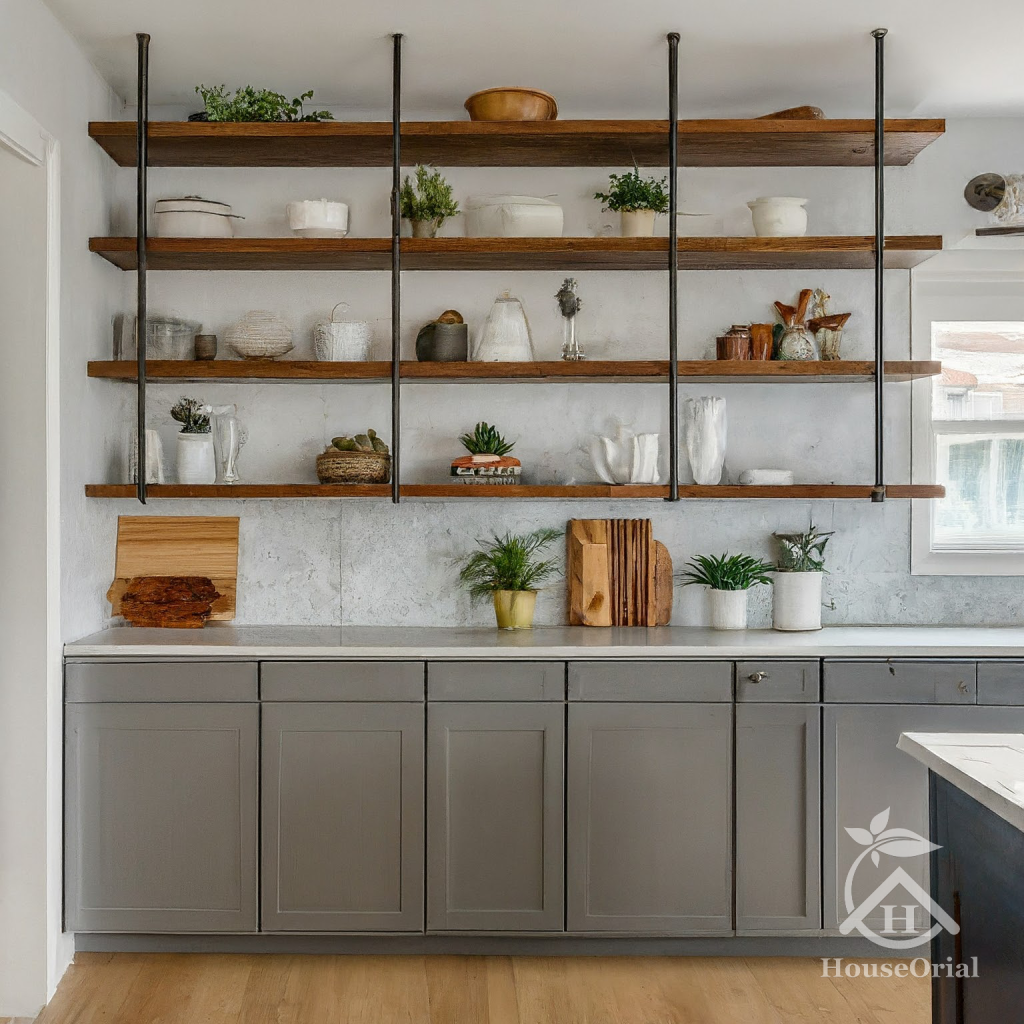
2. Use Open Kitchen Shelves
When there are no cabinets, open kitchen shelves become invaluable for storage. Install open kitchen shelves to store dishes, cookware, and small appliances. It gives you more storage than you think. You can choose our Open Kitchen Shelves Decorating Ideas article to keep your kitchen items on open kitchen shelves and add personal style. We hope this gives you a great idea about Open Kitchen Shelves.
3. Use Baskets
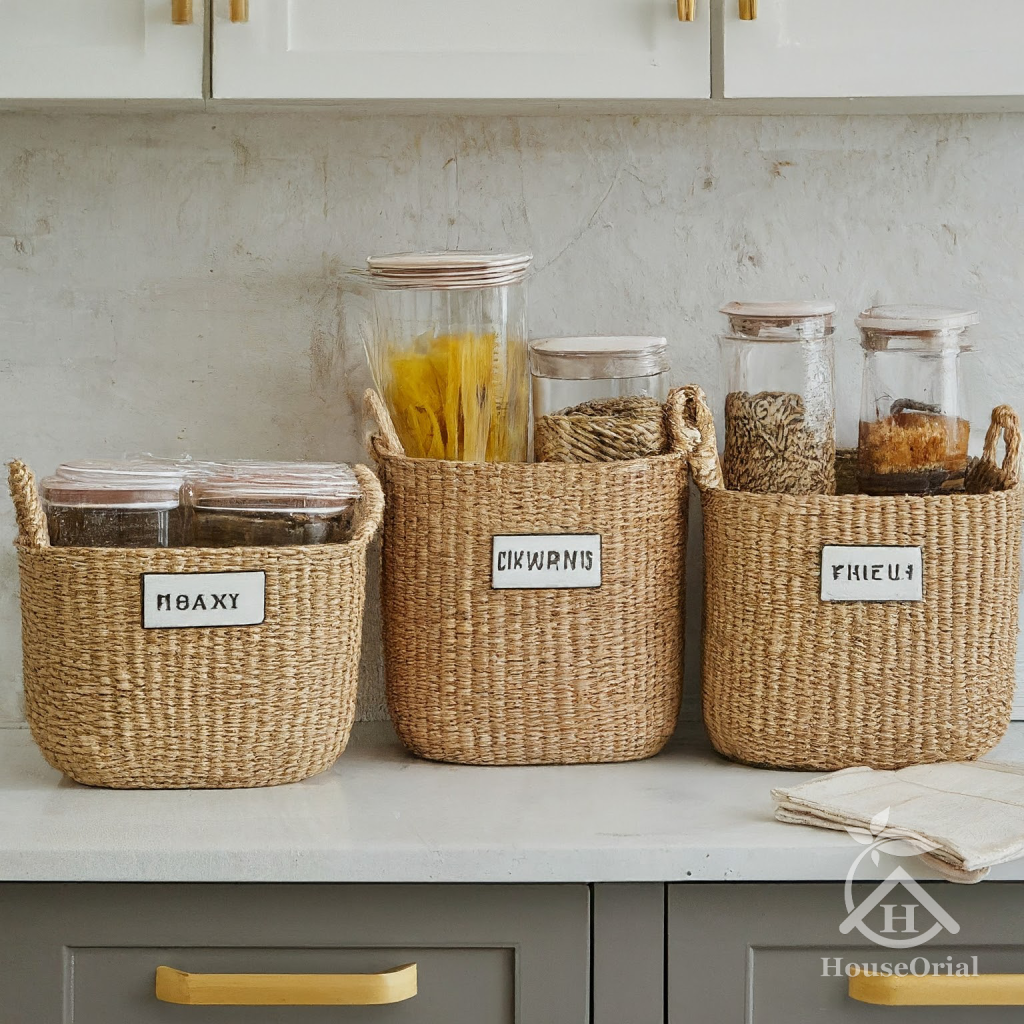
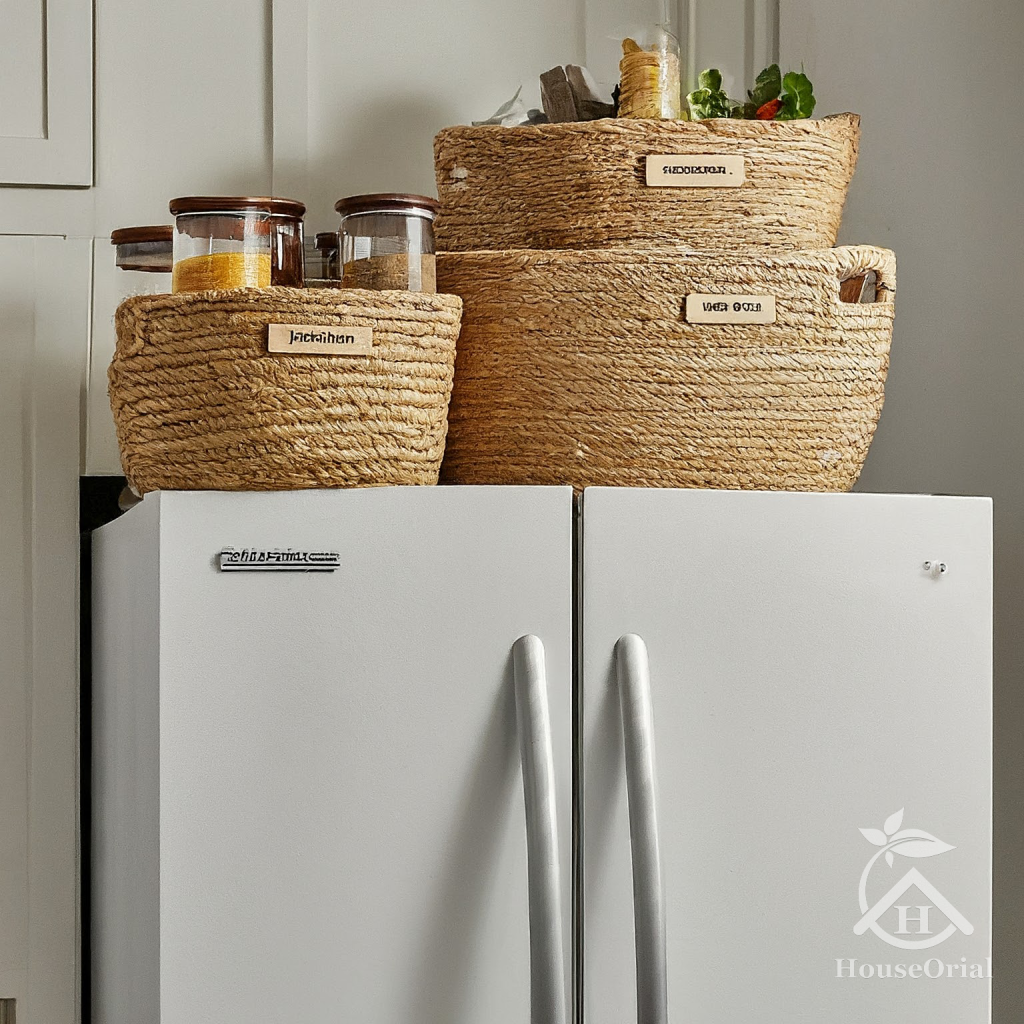
Stacking and storing cooking items without a cabinet can be a problem. Baskets can be a valuable solution in this case. Items such as grains, pasta, spices, and snacks can be placed in the basket. Label each item to categorize items and find them easily. You can place the baskets on your fridge, counter, or open kitchen shelves.
4. Use a pegboard
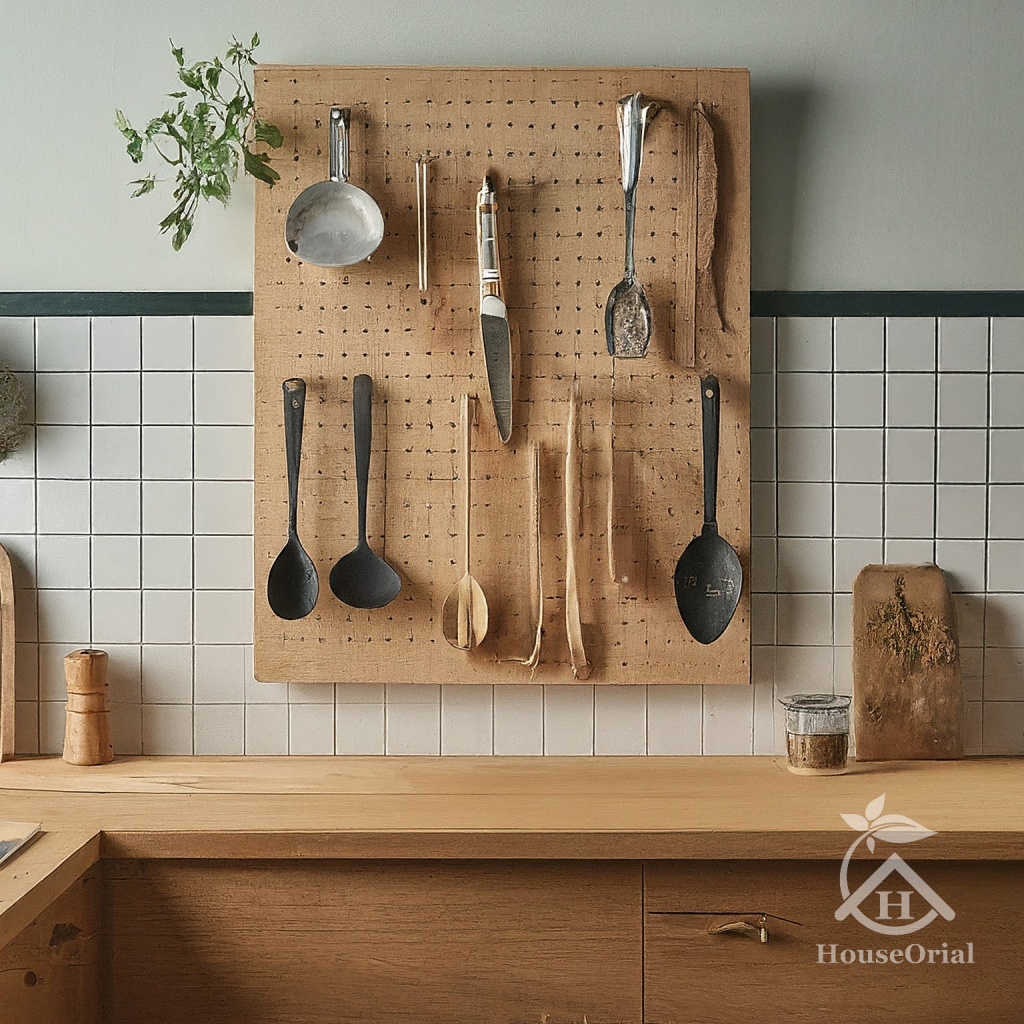
Spoons, knives, spatulas, and other kitchen tools take up valuable counter space. So use a pegboard on your kitchen wall to save counter space. Pegboards are evenly perforated boards that allow you to insert pegs or hooks wherever needed. Each item hung on the pegboard can be easily kept within your reach. Plus, pegboards can be easily reconfigured by removing pegs or hooks to accommodate your changing storage needs.
5. A rolling cart is the smart solution.
Rolling carts can provide a surprising amount of storage, even in a small kitchen. It can carry everything from your kitchen essentials to spices. It helps to keep things tidy and easily accessible, reducing clutter.
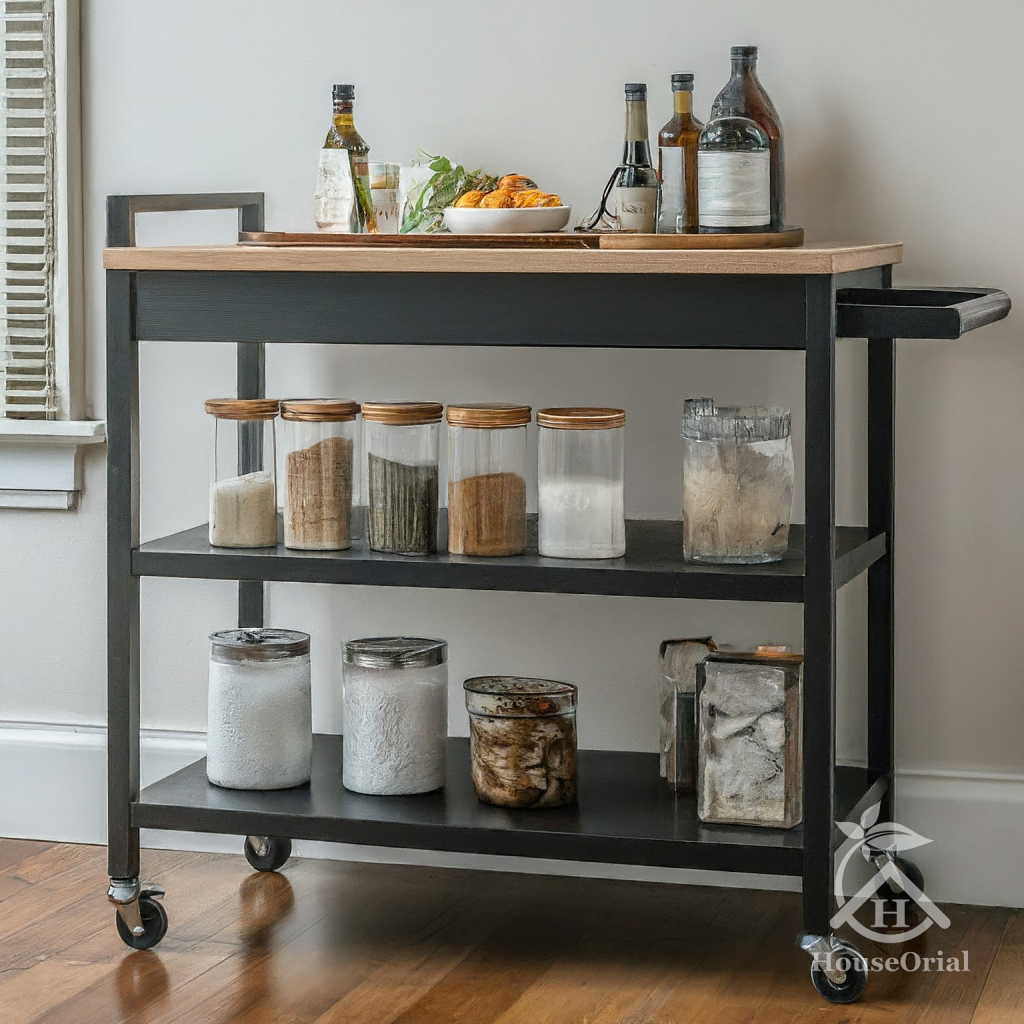
6. Get creative with hooks and racks
Hooks and racks are versatile storage solutions that can be mounted on walls, backsplashes, or under shelves. Use hooks to hang pots, pans, utensils, and even mugs. Install a magnetic knife strip to keep knives safely stored and easily accessible.
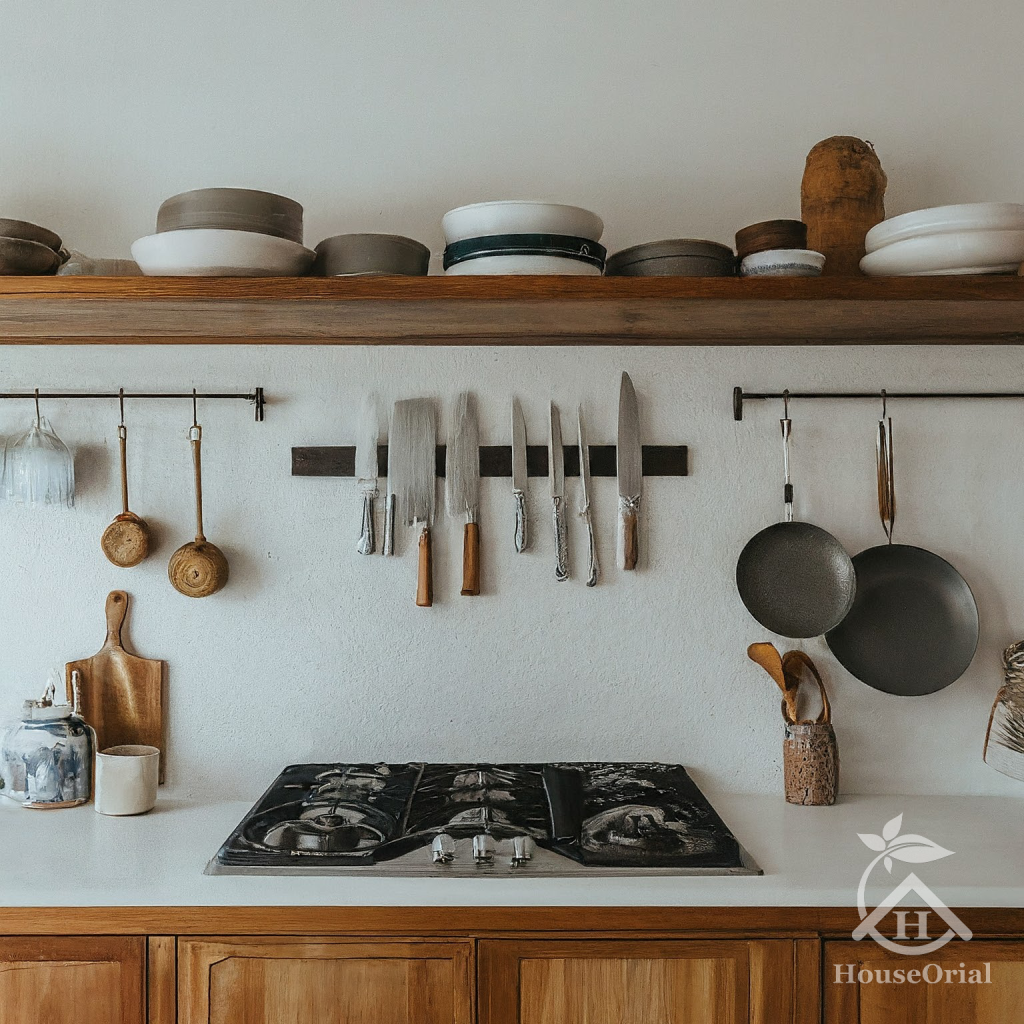
7. Optimize underutilized spaces
Use the often-overlooked areas of your kitchen, such as the space above the refrigerator, under the sink, or above the cabinets. Store less frequently used items in baskets or bins and place them in these spaces. Install tension rods under the sink to hang cleaning supplies or dish towels. Maximize the space above the refrigerator by placing baskets or decorative boxes to store kitchen linens or pantry overflow items.
8. Create zones
Divide your kitchen into zones based on functionality to streamline your cooking and food preparation processes. Designate specific areas for food storage, food preparation, cooking, and cleaning. Keep frequently used items within reach of their respective areas to reduce unnecessary movement and increase efficiency.
9. Consider multi-functional furniture
In a small kitchen, every piece of furniture should serve a dual purpose. Invest in multi-functional furniture such as kitchen carts with built-in storage or foldable dining tables that can also serve as extra counter space. Choose furniture with wheels for added mobility, allowing you to rearrange your kitchen layout as needed.
10. Embrace minimalism
In a space-constrained kitchen, less is often more. Reduce your kitchen tools, utensils, and appliances to the essentials. Donate or sell items you rarely use to free up valuable storage space. Embrace a minimalist aesthetic by choosing sleek, space-saving designs and keeping countertops clutter-free.
11. Maximize Vertical Storage
Take advantage of vertical space by installing tall shelves or bookcases. Store items you don’t use often on high shelves, using a step stool or ladder for access when needed. Consider placing tension rods or hooks along the shelves to hang kitchen tools or cookware.
12. Think outside the box
When organizing a small kitchen without cabinets, don’t be afraid to think outside the box. Get creative with storage solutions by rearranging items like baskets, crates, or even shoe organizers. Use vertical space inside cabinet doors for extra storage using adhesive hooks or organizers.
FAQs: How to Organize a Small Kitchen Without Cabinets
Here are some common questions readers have about organizing a small kitchen without cabinets, based on the tips in this article:
1(Q): Is it really possible to organize a small kitchen without any cabinets?
A: Yes! By using walls, vertical space, open shelves, hooks, baskets, and multi-functional items, you can create plenty of storage. The key is assessing your space first and getting creative with alternatives.
2(Q): Will open shelves make my kitchen look cluttered?
A: Not if styled properly. Group similar items, use matching containers, and leave some negative space. Open shelves can actually make your kitchen feel more open and airy while displaying your favorite dishes.
3(Q): What are the best storage solutions for kitchens with no cabinets?
A: The best storage solutions include open shelves, baskets, pegboards, rolling carts, magnetic knife strips, and wall hooks. These options help keep kitchen essentials organized while saving valuable counter and floor space.
4(Q): How can I store pots and pans without cabinets?
A: Pots and pans can be stored using wall-mounted hooks, hanging racks, pegboards, or rolling carts. These solutions keep cookware easily accessible and free up counter space in a cabinet-free kitchen.
5(Q): How do I keep a small kitchen clutter-free without cabinets?
A: To keep your kitchen clutter-free, embrace minimalism by keeping only essential tools and appliances. Create functional zones, store items vertically, and regularly remove items you no longer use. Using labeled baskets and designated storage areas also helps maintain order.
6(Q): Can a small kitchen without cabinets still look stylish?
A: Absolutely. A small kitchen without cabinets can look stylish by using coordinated baskets, matching containers, decorative open shelves, and a consistent color palette. Combining function with aesthetics creates a clean, modern, and visually appealing kitchen space.
Conclusion
Organizing a small kitchen without a cabinet can seem daunting at first, but with strategic planning and creativity, you can optimize your space to its fullest potential. By utilizing wall space, investing in storage containers, getting creative with hooks and racks, and maximizing unused areas, you can create a functional and efficient kitchen that meets your needs. We hope that after reading this article you have a complete and effective idea of how to organize a small kitchen without cabinets. But remember the information provided is based on practical solutions and creative hacks. Always adapt these ideas to your specific kitchen layout and personal preferences.
Want more cabinet-free kitchen ideas? Follow HouseOrial on Pinterest for daily inspiration.