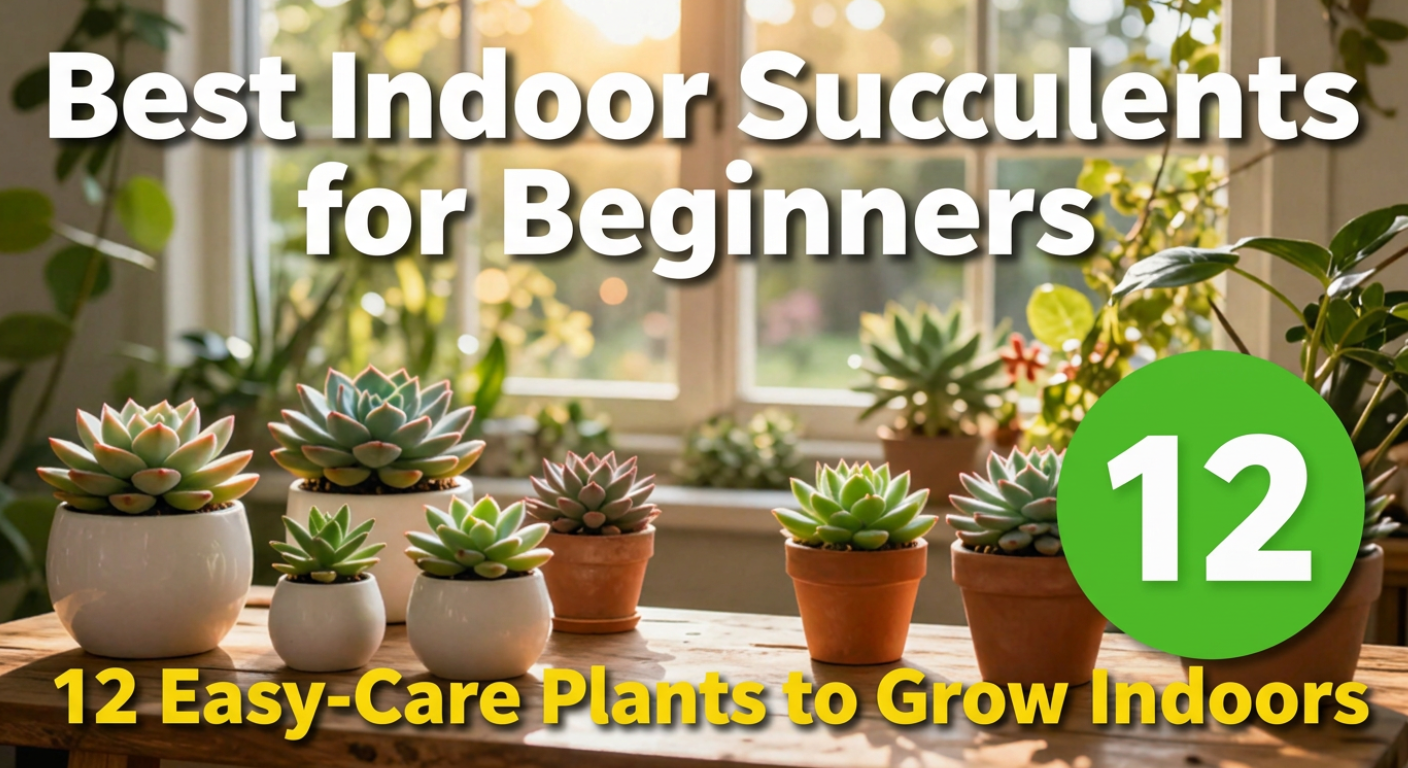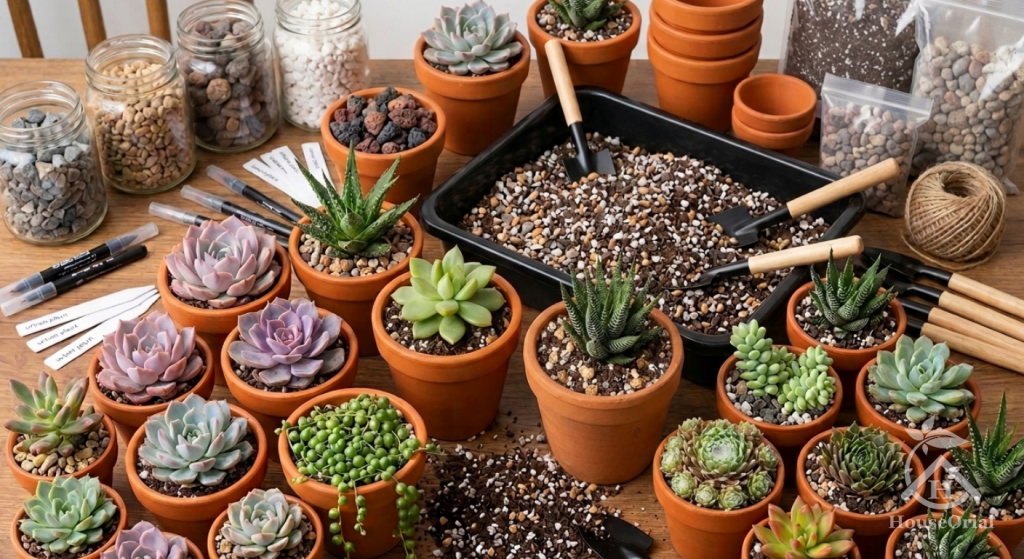

We all love beautiful succulents on our windowsills. Many people think these plants are impossible to kill. However, keeping succulents alive indoors can actually be tricky. They often turn soft, brown, and die if you treat them like regular houseplants.
The good news is that indoor succulent care is quite simple once you fix a few common mistakes. In fact, ninety percent of succulent problems come down to three main factors: too much water, low light, or the wrong potting soil.
This step-by-step guide covers everything you need to know to grow healthy indoor succulents. You will learn how to choose the right plant at the shop and how to create an easy seasonal care routine. Whether you are starting with your very first Jade Plant or saving an old plant on your shelf, these practical tips will help keep your succulents thriving.
What Are Indoor Succulents?
Succulents are unique plants. They store water in their thick leaves, stems, or roots. This survival skill helps them live in dry places with very little water. The name comes from the Latin word “sucus.” This word means juice or sap. It refers to the plant’s built-in water storage.
People often mix up the words “succulent” and “cactus.” However, cacti are just one specific family inside the larger succulent group. Almost all cacti are succulents, but not all succulents are cacti.
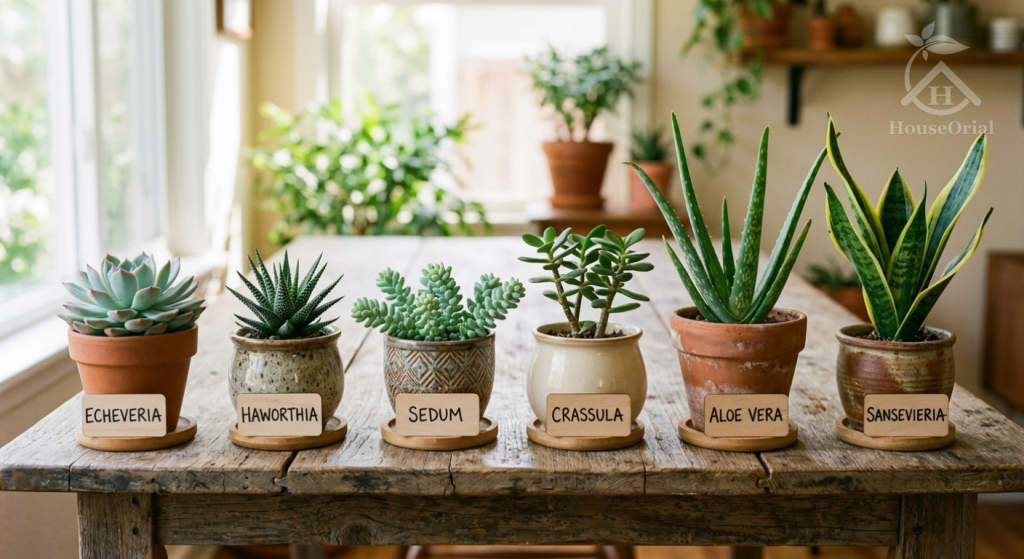
Here are some popular indoor succulent varieties:
1. Echeveria: These have a beautiful rosette shape and soft pastel colors.
2. Haworthia: These have cool stripes. They tolerate low light and are great for beginners.
3. Sedum (Burro’s Tail): This is a trailing plant with plump, teardrop leaves.
4. Crassula (Jade Plant): This variety grows like a small tree and handles mistakes well.
5. Aloe Vera: This plant looks great and helps soothe minor burns.
6. Sansevieria (Snake Plant): This is a very tough, resilient plant.
These plants originally grew in harsh, arid climates. Their homes were deserts, rocky cliffs, and dry grasslands. In these places, rain is rare and soil drains very fast. This background explains their indoor care. They are built for dry scarcity, not for too much water.
Why Grow Succulents Indoors?
Succulents are household favorites for good reason. They combine unique beauty with practical benefits. Unlike many indoor plants, they demand very little attention. They fit comfortably into busy lifestyles.
Here are the top reasons to grow succulents indoors:
Low maintenance once established: Established succulents do not need constant care. Tropical houseplants need consistent humidity and frequent watering. Succulents handle an irregular schedule much better. They are ideal for busy people or frequent travelers.
Space-Efficient: Many varieties stay quite small. They are perfect for desks, narrow shelves, and windowsills. They easily fit in spaces where larger plants cannot grow.
Huge Visual Variety: These plants offer enormous visual variety without needing much space. You can choose the geometric rosettes of Echeveria. You can also pick the trailing tendrils of the String of Pearls. They bring diverse shapes, colors, and textures to your home.
Air-Purifying Qualities: Like many premium houseplants, succulents contribute to a healthier indoor environment. Varieties like Aloe Vera and Snake Plants actively help filter indoor air.
Easy to propagate: A single healthy succulent can produce dozens of new plants from leaf or stem cuttings, making it a budget-friendly way to fill your home with greenery.
Perfect for Travelers: Succulents store water internally. They can comfortably go a week or two without any attention. A fern or a peace lily will stress and wilt within days. This makes succulents the perfect choice for frequent travelers or forgetful owners.
An Educational Entry Point: Succulents are a great educational tool for new plant owners. The effects of overwatering and underwatering show up quickly. They teach you to read important visual cues. You will learn to notice wrinkled leaves, color shifts, and soil texture. These skills will help you care for other houseplants in the future.
How to Choose Healthy Indoor Succulents
Buying a healthy succulent is the first step toward growing a beautiful indoor garden. Even the best care routine cannot always save a plant that is already unhealthy. That’s why it’s worth spending a few extra minutes inspecting a succulent before bringing it home.
Keep in mind that not every succulent is ideal for indoor growing. Some varieties need several hours of intense direct sunlight every day, while others adapt much better to the lower light levels found inside homes. If you’re new to indoor gardening, choose beginner-friendly succulents that are known for being easy to grow and forgiving of small mistakes.
Here are the most important things to check before buying an indoor succulent.
1. Look for Firm, Healthy Leaves
Healthy succulent leaves should feel thick, firm, and full of water. This is a sign that the plant is well hydrated and storing enough moisture.
Avoid plants with leaves that are:
- Soft or mushy
- Wrinkled or shriveled
- Brown, black, or translucent
- Damaged or broken
Wrinkled leaves often mean the plant needs water, while soft, mushy leaves usually point to overwatering or early root rot. Choosing a plant with firm leaves gives you a much better chance of long-term success.
2. Choose a Compact, Balanced Shape
A healthy indoor succulent should have a neat, compact appearance. The leaves should grow closely together, creating a full and balanced shape.
Be cautious if you notice:
- A long, thin stem
- Large spaces between leaves
- A plant leaning heavily toward one side
These are common signs of etiolation, also called stretching. This happens when a succulent doesn’t receive enough light. While it can recover with better lighting, it usually won’t return to its original compact shape.
3. Check the Root System (If Possible)
If you’re buying from a nursery or garden center, you may be able to gently slide the plant out of its pot to inspect the roots.
Healthy roots are usually:
- White or light brown
- Firm to the touch
- Well spread throughout the soil
4. Avoid succulents with roots that are:
- Black or dark brown
- Soft or slimy
- Giving off an unpleasant smell
These are common signs of root rot, one of the biggest problems for indoor succulents.
5. Inspect the Leaves for Pests
Always look closely at both the top and underside of the leaves. Tiny pests can hide in small spaces and quickly spread to your other indoor plants.
Watch for:
- Cotton-like white patches
- Tiny moving insects
- Sticky residue
- Fine webbing
- Small bite marks or damaged leaves
These signs may indicate pests such as mealybugs or spider mites. Buying a pest-free succulent helps protect your entire indoor garden.
6. Don’t Panic Over a Few Yellow Lower Leaves
Seeing one or two yellow leaves near the bottom of the plant isn’t always a problem. Older leaves naturally die as the succulent grows.
However, if several leaves are turning yellow at the same time, check the soil before buying. Wet soil combined with yellow leaves often suggests overwatering. If the soil is dry, the yellowing may simply be part of the plant’s natural growth cycle.
7. Notice If Leaves Fall Off Too Easily
Gently touch one or two leaves.
Some succulents, such as Burro’s Tail, naturally drop leaves very easily, so this alone isn’t always a concern. However, if many leaves fall off with the lightest touch and they also appear yellow, soft, or discolored, the plant may be stressed by overwatering, poor health, or root problems.
8. Take a Moment to Check the Entire Plant
Before making your final choice, step back and look at the succulent as a whole. A healthy indoor succulent should look vibrant, balanced, and free from obvious damage.
Ask yourself these simple questions:
- Do the leaves look firm and healthy?
- Is the plant compact instead of stretched?
- Are there any signs of pests?
- Does the soil appear well-drained rather than soaking wet?
- Does the succulent look healthy overall?
If the answer is “yes” to all of these, you’ve likely found a great plant that will settle into your indoor garden and thrive with proper care.
Quick Tip
A healthy succulent costs no more than an unhealthy one, but it can save you weeks of frustration. One of the easiest ways to succeed in growing succulents indoors is to start with a strong and healthy plant.
10 Essential Indoor Succulent Care Tips
Use this quick checklist as a simple guide for caring for your indoor succulents. These basic tips apply to most succulent varieties and can help your plants stay healthy, compact, and beautiful.
- Choose a pot with drainage holes. Always use a pot with at least one drainage hole to prevent water from collecting around the roots.
- Use a well-draining succulent soil mix. Plant your succulent in a gritty cactus or succulent mix that drains quickly and allows air to reach the roots.
- Place your succulent in bright light. Keep it near a bright south-facing or west-facing window whenever possible. If your home has low light, use a grow light.
- Water only when the soil is completely dry. Check the soil with your finger or a moisture meter before watering. Never water on a fixed schedule.
- Water deeply, then let excess water drain away. Water until it flows out of the drainage hole, then empty the saucer to prevent root rot.
- Avoid misting the leaves. Succulents don’t need extra humidity. Water the soil instead of spraying the leaves.
- Rotate the pot every few weeks. Turning the pot helps your succulent grow evenly instead of leaning toward the light.
- Inspect for pests regularly. Check the leaves and leaf crevices for mealybugs, spider mites, or other common pests.
- Reduce watering during winter. Most indoor succulents grow more slowly in winter and need less water.
- Fertilize lightly during the growing season. Feed with a diluted succulent fertilizer in spring and summer, but skip fertilizing during winter.
Following these simple care practices will keep most indoor succulents strong, healthy, and beautiful all year round.
Common Beginner Mistakes in Indoor Succulent Care
Everyone makes mistakes when they first start growing indoor succulents. The good news is that most problems are easy to avoid once you know what to look for. Here are the most common mistakes beginners make.
1. Watering Too Often
Overwatering is the biggest reason indoor succulents die. Always let the soil dry out completely before watering again. Don’t water on a fixed schedule. Check the soil first.
2. Giving Too Little Light
Succulents need plenty of bright light to stay healthy. Placing them in dark corners or rooms with little sunlight can cause weak, stretched growth. Keep them near a bright window or use a grow light if needed.
3. Using the Wrong Soil
Regular potting soil holds too much water. Succulents grow best in a fast-draining cactus or succulent soil mix that dries quickly and keeps the roots healthy.
4. Using Pots Without Drainage Holes
A pot without a drainage hole traps extra water around the roots. This can quickly cause root rot. Always choose a pot with at least one drainage hole.
5. Treating Every Succulent the Same
Not all succulents have the same care needs. Some need more sunlight, while others can handle lower light. Learn about your plant’s specific requirements for the best results.
6. Ignoring Seasonal Changes
Most indoor succulents grow actively in spring and summer and slow down during winter. Water less in winter and avoid fertilizing until the growing season returns.
7. Using Poor-Quality Succulent Soil
Not every soil labeled “succulent mix” drains well. If water stays on the top of the soil for more than a few seconds after watering, the mix needs more coarse sand, perlite, or pumice to improve drainage.
8. Repotting at the Wrong Time
Don’t repot your succulent as soon as you bring it home. Give it one to two weeks to adjust to its new environment first. On the other hand, don’t leave it in the same nursery pot for years. Repot when the roots outgrow the container or the plant stops growing well.
Final Tip
Most indoor succulent problems come from just a few simple mistakes. Give your plant plenty of light, use well-draining soil, and water only when the soil is completely dry. Following these basics will help your succulents stay healthy and thrive indoors.
Choosing the Best Light for Indoor Succulents
Not all windows provide the same amount of light. Choosing the right spot can make a big difference in how your indoor succulents grow.
Here’s a simple guide:
- South-facing window: Best for most succulents. It provides the brightest light for most of the day.
- West-facing window: Great for plants that enjoy strong afternoon sun. Move delicate succulents back if the summer sun becomes too intense.
- East-facing window: Provides gentle morning sunlight. It’s a good choice for shade-tolerant succulents like Haworthia.
- North-facing window: Usually provides the least light. Most succulents will need a grow light to stay healthy.
What If Your Home Doesn’t Get Enough Sunlight?
Don’t worry if your home has limited natural light. An LED grow light can help your succulents grow strong and compact. Place the light a few inches above the plant and keep it on for 10–12 hours a day, especially during winter or in darker rooms.
Signs Your Succulent Isn’t Getting Enough Light
Your plant will usually tell you when it’s struggling. Watch for these common warning signs:
- Long, stretched stems
- Wide gaps between leaves
- Smaller new leaves
- Leaning toward the window
- Loss of vibrant color
- Slow or weak growth
- Lower leaves are dropping more quickly than usual
If you see signs of a lack of light in your plant, don’t suddenly expose it to strong sunlight. The plant can burn if suddenly exposed to intense sunlight. Instead, move the plant to a brighter spot a little at a time each day. This gradual move will allow the plant to adjust to the new light without any harm.
Ideal Temperature and Humidity for Indoor Succulents
Most indoor succulents come from dry, warm climates, so they grow best in conditions similar to those found in most homes.
Ideal Temperature
Indoor succulents prefer daytime temperatures between 65–80°F (18–27°C). At night, they can handle cooler temperatures down to 50°F (10°C) without any problems.
However, they don’t like sudden temperature changes or freezing conditions. To keep your succulent healthy, avoid placing it near:
Drafty windows during winter
Heating vents or radiators
Air conditioners blowing directly on the plant
Cold windows where the leaves may touch frosty glass
Humidity
Unlike tropical houseplants, succulents prefer low to moderate humidity. Most varieties grow well when indoor humidity stays around 40–50% or even lower.
High humidity, especially when combined with overwatering, can lead to root rot and fungal diseases.
The good news is that the humidity level in most homes is already suitable for succulents. You don’t need to mist them or use a humidifier. In fact, misting can trap moisture between the leaves and increase the risk of rot.
Can You Keep Succulents in the Bathroom or Kitchen?
Bathrooms and kitchens are usually more humid than other rooms. While this is great for tropical plants, it’s not ideal for most succulents.
If you want to keep a succulent in one of these spaces, make sure it receives plenty of bright natural light and has good air circulation. Otherwise, a sunny living room, bedroom, or office is usually a better choice.
Choosing the Best Pot for Indoor Succulents
The right pot plays a big role in keeping your indoor succulent healthy. A good pot helps the soil dry properly, prevents root rot, and supports healthy root growth.
Choose a Pot with Drainage Holes
Always use a pot with at least one drainage hole. It allows excess water to drain away, keeping the roots from sitting in wet soil.
If you love a decorative pot without drainage, use it as an outer cover. Keep your succulent in a smaller nursery pot with drainage holes and place it inside the decorative pot.
Pick the Right Pot Material
Different pot materials hold moisture differently.
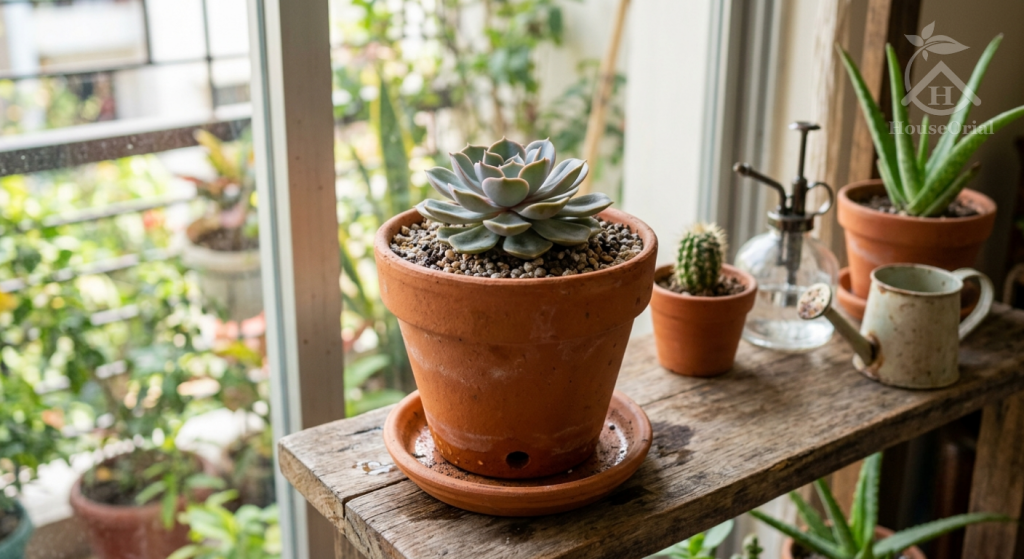
- Terracotta pots are one of the best choices. They absorb extra moisture and help the soil dry faster.
- Unglazed ceramic pots also allow moisture to escape, making them great for succulents.
- Glazed ceramic pots hold moisture longer but work well if they have drainage holes.
- Plastic pots are lightweight and keep the soil moist for longer. They may need less frequent watering.
- Glass containers and terrariums are not ideal because they usually lack drainage holes, which can trap excess moisture.
Choose the Right Pot Size
A pot that’s too large holds more soil, which stays wet for longer. This increases the risk of root rot.
Choose a pot that is only 1–2 inches (2.5–5 cm) wider than the plant’s root ball. As your succulent grows, move it to a slightly larger pot instead of choosing an oversized one.
Quick Tip
The best pot for an indoor succulent is a terracotta pot with drainage holes. It provides excellent airflow, dries the soil faster, and helps reduce the risk of overwatering.
Seasonal Indoor Succulent Care Guide
Indoor succulents need different care as the seasons change. Adjusting your routine helps them stay healthy all year.
Spring
- Most succulents start growing again.
- Water a little more often as the soil dries.
- This is the best time to repot, propagate, and fertilize lightly.
Summer
- Succulents need plenty of bright light.
- Water only after the soil is completely dry.
- Protect plants from harsh afternoon sun if the leaves begin to burn.
Fall
- Growth starts to slow down.
- Water less often.
- Stop fertilizing before winter.
Winter
- Most succulents rest during winter.
- Water much less frequently.
- Move plants closer to a bright window or use a grow light if needed.
Indoor Succulent Display and Decorating Ideas
Indoor succulents are easy to style and can brighten any room. Use these simple ideas to create an attractive display.
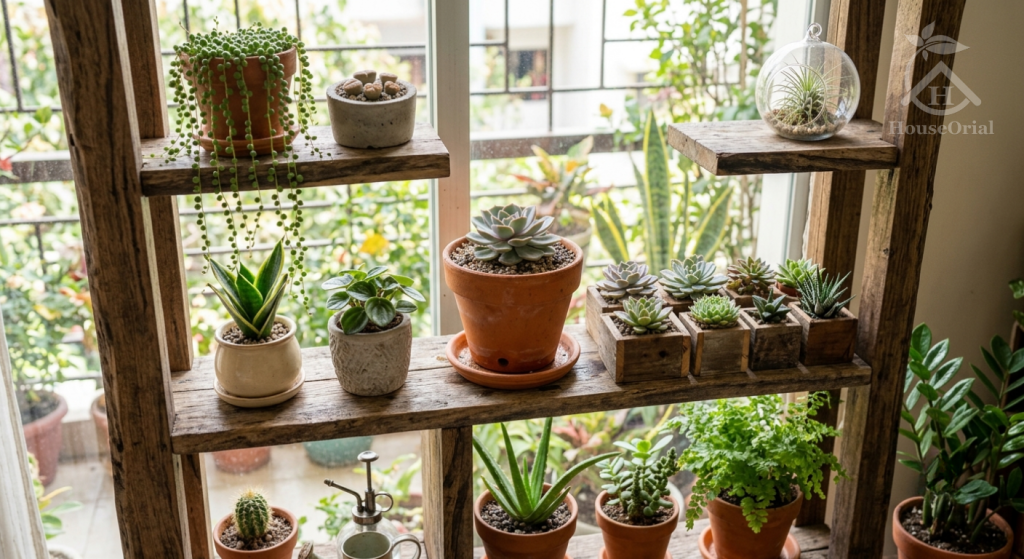
- Mix different shapes and textures. Combine rosette, spiky, and trailing succulents for a natural look.
- Use pots of different heights. This adds depth and makes your display more interesting.
- Choose natural planters. Terracotta, ceramic, wood, and stone pots pair beautifully with succulents.
- Avoid overcrowding one pot. Plant succulents with similar care needs together for healthier growth.
- Use shelves or plant stands. Place them near a bright window so every succulent gets enough light.
Are Indoor Succulents Safe for Pets?
If you have a cat or dog, check that the succulent is safe for them before bringing it home. Some succulents are harmless, while others can be toxic if ingested. Check the ASPCA’s Animal Poison Control information to see if the plant is safe for cats and dogs.
Pet-Friendly Succulents
- Haworthia – Safe for cats and dogs.
- Echeveria – Non-toxic and a great choice for pet owners.
- Burro’s Tail (Sedum morganianum) – Generally considered pet-safe.
- Hens and Chicks (Sempervivum) – Safe for most pets.
Succulents That Can Be Toxic
- Aloe Vera can cause vomiting, diarrhea, and tiredness in pets.
- Kalanchoe may cause stomach problems and heart issues if eaten.
- Jade Plant (Crassula ovata) can cause vomiting and poor coordination.
- String of Pearls may cause stomach upset if ingested.
Tip: Keep toxic succulents out of your pet’s reach. If you think your pet has eaten one, contact your veterinarian immediately.
Common Indoor Succulent Care Myths
Many succulent care tips shared online are not true. Here are a few common myths.
- Myth: Succulents don’t need much light.
Fact: Most indoor succulents need several hours of bright light every day. - Myth: You should mist succulent leaves.
Fact: Succulents don’t need misting. Water the soil instead. - Myth: All succulents need the same care.
Fact: Different succulent species have different light and watering needs. - Myth: Succulents grow well if you ignore them.
Fact: They are low-maintenance, but they still need proper light, watering, and care. - Myth: A sad-looking succulent always needs more water.
Fact: Overwatering is more common than underwatering. Check the soil before watering.
The Importance of Propagating Indoor Succulents
Learning how to propagate indoor succulents is a valuable skill for any plant owner. It allows you to grow new plants from healthy leaves, stem cuttings, or offsets instead of buying replacements every time you want to expand your collection. This not only saves money but also helps you make the most of the plants you already have.
Propagation is also an excellent way to preserve your favorite succulents. If a mature plant becomes leggy, damaged, or starts to decline with age, you can grow a healthy new plant from it and continue enjoying the same variety. Many gardeners also use propagation to replace plants affected by accidental overwatering, physical damage, or natural aging.
Another benefit is that propagation gives you a better understanding of how succulents grow. Watching new roots and leaves develop helps you recognize the signs of healthy growth and build confidence in your indoor gardening skills. It’s a rewarding experience for beginners and experienced plant lovers alike.
Many indoor succulents, including popular varieties like Echeveria, Jade Plant, Haworthia, and Burro’s Tail, can be propagated successfully under the right conditions. While the process is generally simple, each variety responds best to a specific propagation method. Understanding these differences can improve your success rate and help you grow stronger, healthier plants over time.
Frequently Asked Questions (FAQs)
How often should I water indoor succulents?
A key part of indoor succulent care is watering only when the soil is completely dry. Most indoor succulents need water every 1–2 weeks during spring and summer, and less often in winter. The exact schedule depends on your home’s light, temperature, and humidity.
Why are my indoor succulent’s leaves turning mushy?
Soft or mushy leaves are usually a sign of overwatering. Too much water can cause root rot, which is one of the most common indoor succulent care problems. Allow the soil to dry completely before watering again, and check the roots if the problem continues.
Can indoor succulents survive in low light?
Many indoor succulents can survive in low light, but they won’t grow as well. They may become stretched, lose their vibrant color, and produce weaker growth. For lower-light spaces, varieties like Haworthia are a better choice.
Do indoor succulents need fertilizer?
Yes, but only in small amounts. As part of good indoor succulent care, feed your plants with a diluted, balanced fertilizer during spring and summer when they are actively growing. Avoid fertilizing during winter.
How do I know if my indoor succulent needs repotting?
Your indoor succulent may need repotting if roots are growing through the drainage hole, water drains too quickly, or the plant has outgrown its pot. Repotting gives the roots more space and refreshes the soil.
Can I keep indoor succulents in a terrarium?
Most indoor succulents don’t grow well in closed terrariums because they trap moisture and humidity. If you want to display succulents in a glass container, choose an open terrarium with good airflow and proper drainage.
Why is my indoor succulent stretching toward the window?
Succulents that grow tall indoors usually don’t get enough light. Move them to a brighter spot and rotate the pot every few weeks to ensure they get even sunlight. This will help keep the plant small and healthy.
Final Thoughts
Caring for indoor succulents doesn’t have to be difficult. Once you understand their basic needs, such as the right light, proper watering, well-draining soil, and a suitable pot, keeping them healthy becomes much easier.
We hope this Ultimate Indoor Succulent Care Guide has helped you learn the basics of indoor succulent care. With a little patience and regular care, your indoor succulents can stay healthy and beautiful, brightening up your home for many years to come.